Monday, December 17, 2018

Fourth Sunday in Advent/Christmas, 2018

Fourth Sunday in Advent/ Christmas Night  - C

Dec. 23, 2018


Reading I: Micah 5:1-4a

Psalm: 80

Reading II: Hebrews 10:5-11

Gospel: Luke 1:39-45

In today’s Gospel, we are given a close view of the essence of the spirit of Mary, the Mother of Jesus. At the Annunciation, we hear her surrendering her whole self and life to the Lord when she says: “Be it done unto me according to your word.” Then, Mary responds to the need of her older cousin Elizabeth who is pregnant and in need of assistance.

When we hear that Mary traveled to the hill country in haste, we may consider it a kind action.  However, when we look more closely, we realize what was really involved. It required a four-day caravan trip over dirt roads, up and down hills, sometimes on foot, and Mary herself was pregnant.  How selfless and caring she had to be! Even the unborn John the Baptist is affected by her holiness and leaps for joy within his mother’s womb at her presence.

Elizabeth herself responds with the words we repeat every time we say a Hail Mary: “Blessed are you among women and blessed is the fruit of your womb.”

Mary is a model for all of us.  Her “Yes” has no reservations. Whatever is to be required of her is accepted, even the crucifixion of her dearly loved Son. What a courageous mother the Lord gives us to help us carry our own crosses.

Mary is also a person of great humility and gratitude as is evident in her response to her cousin Elizabeth:

The “Magnificat” is prayed as part of the Liturgy of Hours each evening. 
My soul magnifies the Lord
And my spirit rejoices in God my Savior; 

Because He has regarded the lowliness of His handmaid; 
For behold, henceforth all generations shall call me blessed;
Because He who is mighty has done great things for me,
and holy is His name;
And His mercy is from generation to generation 

on those who fear Him.
He has shown might with His arm, 

He has scattered the proud in the conceit of their heart. 
He has put down the mighty from their thrones, 
and has exalted the lowly. 
He has filled the hungry with good things,
and the rich He has sent away empty.
He has given help to Israel, his servant, mindful of His mercy
Even as he spoke to our fathers, to Abraham, and to his posterity forever.


 Reflection Question:   How can Mary help me to become more like her?


Spanish Translation of Reflection Above...
Fourth Sunday in Advent/ Christmas Night


En el Evangelio de hoy, se nos da una visión cercana de la esencia del espíritu de María, la Madre de Jesús. En la Anunciación, la oímos rendir todo su ser y su vida al Señor cuando ella dice: “Hágase esto de acuerdo con su palabra”. Luego, María responde a la necesidad de su prima mayor Elizabeth, que está embarazada y en necesidad. de asistencia.

Cuando escuchamos que María viajó apresuradamente a la región montañosa, podemos considerarla una acción amable. Sin embargo, cuando miramos más de cerca, nos damos cuenta de lo que realmente estaba involucrado. Se requería un viaje en caravana de cuatro días por caminos de tierra, subiendo y bajando colinas, a veces a pie, y Mary misma estaba embarazada. ¡Qué desinteresada y cariñosa tenía que ser! Incluso el no nacido Juan el Bautista se ve afectado por su santidad y salta de alegría dentro del vientre de su madre ante su presencia.

La misma Elizabeth responde con las palabras que repetimos cada vez que decimos un Ave María: “Bendita seas entre todas las mujeres y bendito es el fruto de tu vientre”.

María es modelo para todos nosotros. Su “Sí” no tiene reservas. Se acepta lo que sea necesario para ella, incluso la crucifixión de su amado Hijo. Qué valiente madre nos da el Señor para ayudarnos a llevar nuestras propias cruces.

María también es una persona de gran humildad y gratitud, como es evidente en su respuesta a su prima Elizabeth:

El “Magnificat” se reza como parte de La Liturgia de las Horas cada noche. 

Mi alma engrandece al señor
Y mi espíritu se regocija en Dios mi Salvador;
Porque ha considerado la humildad de su sierva;
Porque he aquí, en adelante todas las generaciones me llamarán bienaventurado;
Porque el que es poderoso ha hecho grandes cosas por mí,
y santo es su nombre;
Y su misericordia es de generación en generación
sobre los que le temen.
Él ha mostrado poder con su brazo,
Él ha esparcido a los orgullosos en la presunción de su corazón.
Él ha derribado a los poderosos de sus tronos,
y ha exaltado al humilde.
Él ha llenado al hambriento de cosas buenas,
ya los ricos los ha enviado vacíos.
Ha ayudado a Israel, su siervo, consciente de su misericordia.

Así como él habló a nuestros padres, a Abraham, ya su posteridad para siempre.


 Pregunta de reflexión:     ¿Cómo puede María ayudarme a ser más como ella?

Monday, December 10, 2018

Dec. 16, 2018 Gaudete Sunday

The Third Sunday of Advent  -  Year C

Reading I:  Zephaniah 3:14-18a

Response:  Isaiah 12:2-3, 4, 5-6

Reading II:  Philippians 4:4-7

Gospel:  Luke 3: 10-18


This Sunday is
often referred to
as Gaudete Sunday. “Gaudete” is Latin for “Rejoice.” We are now halfway to Christmas, so it is time to be happy that the celebration of the coming of our Savior will soon be here. In some parishes, you will note that the priest will wear a pink chasuble to represent joy and there will be a pink candle lit on the Advent wreath.

In today’s Gospel, we hear John the Baptist’s converts asking him what they should do to prepare for the coming of the Lord. John’s response is to share what they have with the needy, e.g., food or clothing. Even today, we witness appeals to reach out to others during Advent by providing food for Christmas meals and for food pantries. We also see groups collecting clothing and/or purchasing coats for children who need the warmth as the cold weather approaches. This positive attitude brings with it happiness and joy to the givers.

When the tax collectors asked what they should do, John tells them not to cheat by taking more money from the people than is really due. The soldiers are told not to force people to give them money or anything else by threatening them. Also, they are to refrain from falsely accusing people. With the Christmas spirit spread around, we do find more kindness and outreach to others at this time.

John promises that someone greater than he is will be bringing them Good News. He will not just baptize with water but also with the Holy Spirit. The call of John is to point to “The One” who is greater than him. I am always struck with the humility of John who works himself tirelessly so that we can Behold the Lamb of God.

I am even more touched by the humility of God not only to send His Son as a weak, dependent, human baby, but to even leave Himself with us under the appearance of bread and wine. How utterly crazy about His creatures He must be to stay with us in this way. Through the Eucharist, He gives us His own body to provide us with both physical and spiritual nourishment. Sometimes there are no words to adequately express our gratitude. Then, silent adoration can become our
only response.

How blessed we are as Christians to have the gift of faith in God our Father, Jesus our Savior, and the Holy Spirit who sanctifies us. Jesus added another very special gift by sharing his own Holy Mother with us. 

  Advent Preparation:   Let us ask Mary to help us prepare for Jesus’ coming... for soon we are going to see the King.


Spanish Translation of Reflection Above...
Gaudete Domingo


Este domingo se refiere a menudo como el domingo de Gaudete. “Gaudete” está en latín para “Alégrate”. Ahora estamos a mitad de camino de la Navidad, por lo que es tiempo de alegrarnos de que pronto llegue la celebración de la venida de nuestro Salvador. En algunas parroquias, notarán que el sacerdote usará una casulla rosada para representar la alegría y habrá una vela rosada encendida en la corona de Adviento.

En el Evangelio de hoy, escuchamos a los conversos de Juan el Bautista preguntándole qué deben hacer para prepararse para la venida del Señor. La respuesta de John es compartir lo que tienen con los necesitados, por ejemplo, comida o ropa. Incluso hoy, somos testigos de llamamientos para llegar a otros durante el Adviento al proporcionar alimentos para las comidas de Navidad y para las despensas de alimentos. También vemos grupos que recolectan ropa y / o compran abrigos para los niños que necesitan calor cuando se acerca el clima frío. Esta actitud positiva trae consigo felicidad y alegría a los donantes.

Cuando los recaudadores de impuestos preguntaron qué debían hacer, John les dice que no hagan trampa al tomar más dinero de la gente de lo que realmente se debe. Se les dice a los soldados que no obliguen a las personas a darles dinero o cualquier otra cosa amenazándolos. Además, deben abstenerse de acusar falsamente a las personas. Con el espíritu navideño extendido, encontramos más bondad y alcance a los demás en este momento.

Juan promete que alguien más grande que él les traerá Buenas Nuevas. Él no solo bautizará con agua sino también con el Espíritu Santo. El llamado de Juan es señalar a “El Uno” que es más grande que él. Siempre me sorprende la humildad de Juan, que se trabaja incansablemente para que podamos ver al Cordero
de Dios.

Me siento aún más conmovido por la humildad de Dios, no solo para enviar a su Hijo como un bebé humano débil y dependiente, sino también para dejarnos a nosotros mismos bajo la apariencia de pan y vino. Qué absolutamente loco por Sus criaturas debe estar para quedarse con nosotros de esta manera. A través de la Eucaristía, Él nos da Su propio cuerpo para proporcionarnos tanto alimento físico como espiritual. A veces no hay palabras para expresar adecuadamente nuestra gratitud. Entonces, la adoración silenciosa puede convertirse en nuestra única respuesta.

Qué bendecidos somos como cristianos por tener el don de la fe en Dios nuestro Padre, Jesús nuestro Salvador y el Espíritu Santo que nos santifica. Jesús agregó otro regalo muy especial al compartir a su propia Santa Madre con nosotros.

 Preparación de Adviento:    Pidámosle a María que nos ayude a prepararnos para la venida de Jesús ... porque pronto veremos al Rey.

Monday, December 3, 2018

Dec. 9, 2018 Prepare Ye

The Second Sunday in Advent   -   Year C

Reading I:  Baruch 5:1-9

Psalm: 126

Reading II:  Philippians 1:
4-6, 8-11

Gospel:  Luke 3:1-6

This week I am going to focus on the Advent wreath as a way of helping us to remember that “Jesus is the reason for the season.” First,
the Advent wreath is made of evergreens. With the evergreens lasting through
all seasons, it reminds us of the eternity of God. The round shape of the wreath
depicts the aspect of no beginning and no end. Evergreen is also a sign of victory. The laurel wreaths worn by the winners in the Olympics symbolize victory. The coming of Jesus assures us that in the end, there will be the victory of good
over evil.

The four candles representing the four Sundays of Advent provide a path for us to travel. First, we need to be reconciled with God and one another. We all can ask the Lord’s forgiveness. Those of us who are Catholic have an added blessing of the opportunity to go to Confession to a priest and receive some guidance on how to improve. We also can receive absolution from our sins. Jesus, realizing the value of verbalizing our sins and hearing the words of forgiveness, gave this power to the apostles. Today, the priests are the vessels through which Jesus provides this blessing.

Christmas is also an ideal time to connect with family, friends, and those
in need
.
In the busyness of our lives, we sometimes neglect to contact people. Advent and Christmas provide a special time to focus on this. If there have been misunderstandings, hurt, or estrangement during the year, this is a special time to reconcile with one another. Sometimes a card, a gift, an invitation, or a letter expressing a sincere apology can open the door to renewed and deeper relationships.

Why the four colored candles? They represent the four Sundays of Advent.
They light the pathway to Christmas. Light is very important so that we won’t lose our way. The candles remind us of the coming of the Savior while we are being bombarded with the strong commercializing which we have come to also associate with the pre-Christmas season. Lighted candles also produce warmth which we connect with love. That is what Christmas is all about:

For God so loved the world, that he gave his only begotten Son, that whoever believes in him should not perish, but have everlasting life.”  John 3:16  

The Christmas spirit is really the spirit of love.
That is what makes the Season a time of happiness and joy.

Finally, we have a white candle representing the Lord himself. The candle is lit on Christmas Eve to symbolize the birth of Jesus as God-man, our Redeemer. He will give us a greater understanding of what God is like by His words and actions in human form.

From the universe and nature, we can know that God is intelligent, creative, and powerful. However, Jesus showed us that God is also merciful, kind, forgiving, sacrificing, and universal in his love.  Jesus became accessible to us. What is more endearing than the sight of the Infant Jesus? What is more touching than the Christmas Carols which make the Advent and Christmas Seasons so joyful?  What greater gift could God the Father possibly have given us? Praise be the Lord of Heaven and Earth Alleluia!

 Reflection Questions:   Is there any relationship that I need to mend?  Is there anyone who will be lonely this Christmas with whom I can connect?  Is there anyone in need whom I can help?
  

Spanish Translation of Reflection Above...
Prepárate

Esta semana me centraré en la corona de Adviento como una manera de ayudarnos a recordar que Jesús es la razón de la temporada”. Primero, la corona de Adviento está hecha de árboles de hoja perenne. Con los árboles de hoja perenne que duran todas las estaciones, nos recuerda la eternidad de Dios. La forma redonda de la corona representa el aspecto de ningún principio y ningún final. Evergreen es también un signo de victoria. Las coronas de laurel llevadas por los ganadores en los Juegos Olímpicos simbolizan la victoria. La venida de Jesús nos asegura que al final, habrá la victoria del bien sobre el mal.

Las cuatro velas que representan los cuatro domingos de Adviento nos proporcionan un camino para viajar. Primero, necesitamos reconciliarnos con Dios y con los demás. Todos podemos pedir el perdón del Señor. Aquellos de nosotros que somos católicos tenemos una bendición adicional de la oportunidad de confesarnos ante un sacerdote y recibir orientación sobre cómo mejorar. También podemos recibir la absolución de nuestros pecados. Jesús, al darse cuenta del valor de verbalizar nuestros pecados y escuchar las palabras de perdón, dio este poder a los apóstoles. Hoy, los sacerdotes son los vasos a través de los cuales Jesús provee esta bendición.

La Navidad también es un momento ideal para conectarse con la familia, los amigos y los necesitados. En el ajetreo de nuestras vidas, a veces descuidamos contactar a las personas. Adviento y Navidad proveen un tiempo especial para enfocarse en esto. Si ha habido malentendidos, daños o alejamientos durante el año, este es un momento especial para reconciliarse unos con otros. A veces, una tarjeta, un regalo, una invitación o una carta que expresa una sincera disculpa pueden abrir la puerta a relaciones renovadas y más profundas.

¿Por qué las cuatro velas de colores? Representan los cuatro domingos de Adviento. Iluminan el camino de la navidad. La luz es muy importante para que no perdamos el camino. Las velas nos recuerdan la venida del Salvador mientras estamos siendo bombardeados con la fuerte comercialización que hemos llegado a asociar también con la temporada previa a la Navidad. Las velas encendidas también producen calor que conectamos con el amor. De eso se trata la Navidad:

Porque tanto amó Dios al mundo, que dio a su Hijo unigénito, para que todo aquel que cree en él, no perezca, sino que tenga vida eterna”.  Juan 3:16  

El espíritu navideño es realmente el espíritu del amor. Eso es lo que hace de la temporada un momento de felicidad y alegría.

Finalmente, tenemos una vela blanca que representa al Señor mismo. La vela se enciende en la víspera de Navidad para simbolizar el nacimiento de Jesús como Dios-hombre, nuestro Redentor. Él nos dará una mejor comprensión de cómo es Dios por medio de sus palabras y acciones en forma humana.

Desde el universo y la naturaleza, podemos saber que Dios es inteligente, creativo y poderoso. Sin embargo, Jesús nos mostró que Dios también es misericordioso, amable, perdonador, sacrificado y universal en su amor. Jesús se hizo accesible para nosotros. ¿Qué es más entrañable que la vista del niño Jesús? ¿Qué es más conmovedor que los villancicos que hacen que las temporadas de Adviento y Navidad sean tan felices? ¿Qué mayor regalo nos podría haber dado Dios el Padre? Alabado sea el Señor del cielo y de la tierra Aleluya!

 Preguntas de reflexión:   ¿Hay alguna relación que deba arreglar? ¿Hay alguien que se sienta solo esta Navidad con quien me pueda conectar? ¿Hay alguien en necesidad a quien pueda ayudar?

Monday, November 26, 2018

Dec. 2, 2018 - The First Sunday of Advent

The First Sunday of  Advent  - Year C

Reading I:  Jeremiah 33: 14-16

Psalm:  25

Reading II:  1 Thessalonians 3:12-4:2

Gospel:  Luke 21:25-28, 34-36

In the first reading, we are reminded that our Creator is a caring being. He created us out of nothing, and we depend on him to keep us in existence. It is also emphasized that Our Creator is a generous Father who keeps his promises.

During Advent, ware reminded that we live between the two comings: the birth of Jesus and his second coming. Each of us is born into a particular time frame. As we strive to follow the example of our Savior, we have the opportunity to pass on the love of our God to our brothers and sisters.

When I, myself, was in the eighth grade, a motto was displayed over the front blackboard in my classroom: “Let us make a positive difference in our world.” This was so appropriate for us young people to internalize. It is basically what St. Paul was urging his converts to do. The late Bishop Joseph Cassidy of Tuam, Ireland expressed it this way in relation to our Creator: “We are not only objects but also instruments of His creativity.”

In the Gospel, St. Luke describes the second coming of Jesus following frightening signs in nature. However, He encourages us “stand erect and raise your heads because your redemption is at hand.” St. Luke tells us to be vigilant at all times and pray that we will ready for the Lord’s coming. No matter what we must face, we are never alone. We can endure because of His love and support.

The particular challenge of the Advent Season is to keep a balance between enjoying the celebratory spirit, the cheerful decorations, the exchange of cards and gifts etc., and remembering that “Jesus is the Reason for the Season.” We become very, very busy.

 Reflection:  It is a time to focus on adoration of a God who freely chose to leave his heavenly realm and take on the helpless, dependent form of a human Infant to redeem us. He also became human to show us what God is like in a form that we could understand. During this Holy Season, let us seek to cultivate a spirit of gratitude for all the Lord’s goodness to us. This can be expressed through prayer and outreach to our brothers and sisters in need of any kind.


Spanish Translation of Reflection Above...

El Primer Domingo de Adviento

En la primera lectura, se nos recuerda que nuestro Creador es un ser cariñoso. Él nos creó de la nada, y dependemos de él para mantenernos en existencia. También se enfatiza que Nuestro Creador es un Padre generoso que cumple sus promesas.

Durante el Adviento, Ware recordó que vivimos entre las dos venidas: el nacimiento de Jesús y su segunda venida. Cada uno de nosotros nace en un marco de tiempo particular. Mientras nos esforzamos por seguir el ejemplo de nuestro Salvador, tenemos la oportunidad de transmitir el amor de nuestro Dios a nuestros hermanos y hermanas.

Cuando yo, yo mismo, estaba en octavo grado, se mostró un lema en la pizarra de mi aula: Hagamos una diferencia positiva en nuestro mundo”. Esto fue muy apropiado para nosotros, los jóvenes, para interiorizar. Es básicamente lo que san Pablo instaba a sus conversos a hacer. El fallecido obispo Joseph Cassidy de Tuam, Irlanda, lo expresó de esta manera en relación con nuestro Creador: “No solo somos objetos, sino también instrumentos de su creatividad”.

En el Evangelio, San Lucas describe la segunda venida de Jesús después de señales aterradoras en la naturaleza. Sin embargo, Él nos alienta a mantenernos erguidos y elevar sus cabezas porque su redención está cerca”. San Lucas nos dice que debemos estar atentos en todo momento y orar para que estemos listos para la venida del Señor. No importa a qué nos enfrentemos, nunca estamos solos. Podemos soportar por su amor y apoyo.

El desafío particular de la Temporada de Adviento es mantener un equilibrio entre disfrutar el espíritu de celebración, las alegres decoraciones, el intercambio de tarjetas y regalos, y recordar que Jesús es la razón de la temporada”. Estamos muy, muy ocupados .

 Reflexión:  Es un momento para enfocarse en la adoración de un Dios que libremente eligió abandonar su reino celestial y tomar la forma indefensa y dependiente de un infante humano para redimirnos. También se hizo humano para mostrarnos cómo es Dios en una forma que pudiéramos entender. Durante esta temporada santa, procuremos cultivar un espíritu de gratitud por toda la bondad del Señor para con nosotros. Esto se puede expresar a través de la oración y la divulgación a nuestros hermanos y hermanas necesitados de cualquier tipo.

Monday, November 19, 2018

Nov. 25, 2018 Christ the King

The Feast of  Christ the King    -   Year B

Reading I:  Daniel 7: 13-14

Psalm:  93

Reading II: Revelation 1:5-8

Gospel: John 18: 33b-37

“Thy kingdom come!” I can recall many years ago feeling overwhelmed as I prayed the “Our Father.” However, it seems even more of a challenge today with all the hate and violence we hear about on a regular basis.

I can vividly recall an evening back in the 70’s when I taught at Aquinas Junior College in Newton, Massachusetts. It was the end of the year, and we 
took the students to the Boston Pops. After the Pops, the faculty stopped at a restaurant to have coffee and a snack. I was sitting at a table with a Jewish faculty member who had recently heard of some unrest related to Jews in the Mid-West. She was terrified. I was shocked that she would be so upset living here in the United States.

After the murder of worshipers at the Tree of Life Synagogue, I certainly understand her fear and realize how naive I was. It seems that daily we see 
a world in which cruelty and violence, rather than love, is embraced by so many. It can be very depressing to see this trend in our country.

I was impressed to learn that this synagogue and others have been regularly helping refugees for many years. Like Jesus, the victims were murdered in spite of and because of the good they were doing. Again, I feel frustrated to 
see all the evil in our world.

However, that makes me appreciate the Lord Jesus all the more. He knew that the kingdom of His Father on this earth would be found in the hearts of some, but rejected by others. Nevertheless, He was willing to offer Himself up for the salvation on all. As Jesus’ followers, we can choose Jesus as the King of our hearts. We can 
make “Love” our goal and “go about doing good” as He did, whether we will gain acceptance or rejection as a result. Jesus did what He could and that is
all that we can do. In
us, at least, the Father’s kingdom will come and His will,
will be done.


 Reflection: 

You may hear this hymn on 
GodTube.


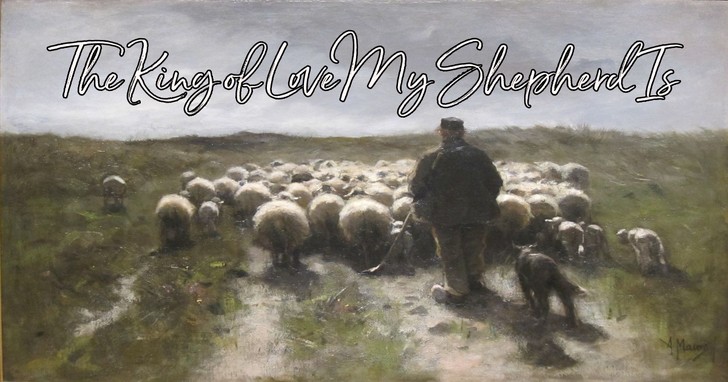
 The King of Love My Shepherd Is

“The King of Love My Shepherd Is” is an 1868 hymn with lyrics written by Henry Baker, based on the Welsh version of Psalm 23 and the work of Edmund Prys. Obvious from its title, this hymn plays upon the metaphor of Jesus as a shepherd leading his followers from evil and despair towards salvation. Find the lyrics and story of this wonderful hymn below!
4 In death's dark vale I fear no ill,
with thee, dear Lord, beside me;
thy rod and staff my comfort still,
thy cross before to guide me.

5 Thou spreadst a table in my sight;
thy unction grace bestoweth;
and oh, what transport of delight
from thy pure chalice floweth!

6 And so through all the length of days,
thy goodness faileth never;
Good Shepherd, may I sing thy praise
within thy house forever.


Spanish Translation of Reflection Above...

Cristo Rey


¡Venga tu reino! Puedo recordar que hace muchos años me sentí abrumado mientras rezaba el Padre Nuestro”. Sin embargo, hoy parece un desafío aún mayor con todo el odio y la violencia que escuchamos de manera regular.

Puedo recordar vívidamente una tarde en los años 70 cuando enseñé en el Aquinas Junior College en Newton, Massachusetts. Era el final del año, y llevamos a los estudiantes a los Boston Pops. Después de los Pops, la facultad se detuvo en un restaurante para tomar un café y un bocadillo. Estaba sentado en una mesa con un miembro de la facultad judía que recientemente había oído hablar de algunos disturbios relacionados con los judíos en el Medio Oeste. Ella estaba aterrorizada. Me sorprendió que ella estuviera tan molesta viviendo aquí en los Estados Unidos.

Después del asesinato de adoradores en la Sinagoga del Árbol de la Vida, ciertamente entiendo su miedo y me doy cuenta de lo ingenua que era. Parece que todos los días vemos un mundo en el que la crueldad y la violencia, en lugar del amor, son abrazadas por tantos. Puede ser muy deprimente ver esta tendencia en nuestro país.

Me impresionó saber que esta sinagoga y otras han estado ayudando regularmente a los refugiados durante muchos años. Al igual que Jesús, las víctimas fueron asesinadas a pesar y por el bien que estaban haciendo. Una vez más, me siento frustrado de ver todo el mal en nuestro mundo.

Sin embargo, eso me hace apreciar aún más al Señor Jesús. Sabía que el reino de Su Padre en esta tierra se encontraría en los corazones de algunos, pero que otros lo rechazarían. Sin embargo, Él estaba dispuesto a ofrecerse a sí mismo para la salvación de todos. Como seguidores de Jesús, podemos elegir a Jesús como el Rey de nuestros corazones. Podemos hacer que “Amar” sea nuestra meta y “seguir haciendo el bien” como Él lo hizo, ya sea que ganemos aceptación o rechazo como resultado. Jesús hizo lo que pudo y eso es todo lo que podemos hacer. Inus, al menos, el reino del Padre vendrá y su voluntad, se hará.

 Reflexión: 

Puede escuchar este himno en GodTube.


“El Rey del Amor es mi Pastor” es un himno de 1868 con letras escritas por Henry Baker, basado en la versión galesa del Salmo 23 y la obra de Edmund Prys. Obvio de su título, este himno toca la metáfora de Jesús como un pastor que guía a sus seguidores del mal y la desesperación hacia la salvación. ¡Encuentra las letras y la historia de este maravilloso himno a continuación!
4 En el valle oscuro de la muerte no temo ningún mal,
Contigo, querido Señor, a mi lado;
Tu vara y mi bastón aún mi consuelo,
Tu cruz antes de guiarme.

5 Extiendes una mesa delante de mí;
tu gracia de unción otorga;
y oh, qué transporte de deleite.
de tu puro cáliz fluye!

6 Y así a lo largo de todos los días,
tu bondad nunca deja de ser;
Buen Pastor, que yo cante tu alabanza.
Dentro de tu casa para siempre.

Monday, November 12, 2018

Nov. 18, 2018 - Be Vigilant

The Thirty-Third Sunday in Ordinary Time - B

Reading I:  Daniel 12:1-3

Psalm:  16

Reading II:  Hebrews 10:11-14,18

Gospel:  Mark 13:24-32

As I look out my window, I see that the leaves on the Dogwood tree are changing. The squirrels are scurrying around making nests and collecting food for the upcoming winter. This reminds me of Jesus’ words to his followers about the sufferings and disasters to come, followed by the second coming of the Lord. Jesus warns them to be vigilant, for they do not know when the master
will come.

Although it is important to be prepared for the coming of the Lord, we know that he is a merciful Master. I recall a story about a holy man who was asked what he would do if he were told that he was going to die the next day. His response was that he would do what he usually would be doing.

If we are trying to follow the commandments of the Lord and reach out to one another in love, we do not need to fear the second coming of the Lord. However, we can become careless and wander off the sacred path.

The late Catholic Archbishop of Tuam, Ireland, tells of his experience with a dying man.  He was old and had lived a good life. As he lay there he was consumed with remorse, judging himself harshly.  He had not spent enough time in prayer with
his Savior.

Often the regrets we have at the end of our lives are about things that we did not do. As humans, we have limitations which make it impossible to do all that we would like. All we can do is our best. Sr. Thea Bowman, a beautiful, dynamic Black professor, whom I met at Xavier University of New Orleans, Louisiana, did much to bring races together and inspire her students. Yet, when asked what she wanted on her gravestone, she said just write: “I Tried.”

If we take the time to communicate with the Lord and live our lives as we would knowingly live our last, we will be prepared.

                                  O Lord, ...
                                  a thousand years to you...
                                  are like yesterday, already gone,
                                  like a short hour in the night...
                                  Teach us how short our life is,
                                  so that we may become wise.
                                                    — Psalm 90: 1.4. 12

 Reflection Question:   Is there anything you might regret when you
meet the Lord?


Spanish Translation of Reflection Above...

Estar Atentos

Cuando miro por la ventana, veo que las hojas en el árbol de Dogwood están cambiando. Las ardillas corren alrededor haciendo nidos y recolectando comida para el próximo invierno. Esto me recuerda las palabras de Jesús a sus seguidores sobre los sufrimientos y desastres por venir, seguidos por la segunda venida del Señor. Jesús les advierte que estén atentos, porque no saben cuándo vendrá el maestro. 

Aunque es importante 
estar preparado para la venida del Señor, sabemos que es un Maestro misericordioso. Recuerdo una historia sobre un hombre santo al que le preguntaron qué haría si le dijeran que iba a morir al día siguiente. Su respuesta fue que haría lo que normalmente haría.

Si estamos tratando de seguir los mandamientos del Señor y acercarnos los unos a los otros con amor, no debemos temer la segunda venida del Señor. Sin embargo, podemos volvernos descuidados y desviarnos del camino sagrado.

El fallecido arzobispo católico de Tuam, Irlanda, cuenta su experiencia con un hombre moribundo. Era viejo y había vivido una buena vida. Mientras yacía allí, lo consumían los remordimientos, juzgándose con dureza. No había pasado suficiente tiempo en oración con su Salvador.

A menudo, los arrepentimientos que tenemos al final de nuestras vidas son sobre cosas que no hicimos. Como seres humanos, tenemos limitaciones que hacen imposible hacer todo lo que nos gustaría. Todo lo que podemos hacer es nuestro mejor esfuerzo. La hermana Thea Bowman, una hermosa y dinámica profesora negra, a quien conocí en la Universidad Xavier de Nueva Orleans, Louisiana, hizo mucho para reunir a las carreras e inspirar a sus estudiantes. Sin embargo, cuando se le preguntó qué quería en su lápida, ella solo dijo: “Lo intenté”.

Si nos tomamos el tiempo para comunicarnos con el Señor y vivir nuestras vidas como lo haríamos a sabiendas, estaremos preparados.

  Pregunta de reflexión:    ¿Hay algo de lo que puedas arrepentirte cuando te encuentres con el Señor?
  
                                 Oh Señor, ...
                                  mil años para ti ...
                                  son como ayer, ya se han ido,
                                  como una hora corta en la noche ...
                                  Enséñanos lo corta que es nuestra vida,
                                  para que seamos sabios.
                                                    — Salmo 90: 1.4. 12
                               

Monday, November 5, 2018

Nov. 11, 2018 The Widow's Mite

The Thirty-Second Sunday in Ordinary Time - B
http://www.freebibleimages.org/photos/lumo-widow-mite/

Reading I:  1 Kings 17:10-16

Psalm:  146

Reading II:  Hebrews 9: 24-28

Gospel:  Mark 12: 38-44

Recovering from a minor foot surgery this week, I had the time to look at Facebook which I only get to do occasionally. There, in a post from my friend, Michele Ann, was a cartoon showing Winnie the Pooh and Mickey Mouse. Winnie was asking for some money. Mickey explores his pockets to see what he has. After Mickey gives Winnie the gift, they both have big smiles on their faces. The caption is: “Your greatness is not what you have, but what you give.”

The theme in all the Mass readings today is the virtue of generosity. In the first reading, we meet the prophet Elijah who asks a poor widow for food and drink. All she has is a little oil and flour left to feed herself and her son. After that is gone, she expects that they will starve to death. Nevertheless, at his request, she makes a cake for the prophet who tells her that God will not allow the jug of oil and the jar of flour to go empty until the drought is over.


The second reading reminds us of the total gift of self of our Lord and Savior when He freely embraces the suffering of the Passion in order to redeem us. Even though He realizes that some will not appreciate His sacrifice, He still generously offers Himself for the salvation of all.

In the Gospel, Jesus points out the poor widow placing a mite (a very small coin) in the temple treasury. It is her generous spirit that the Lord praises rather than the amount she is contributing. As a widow in the times of Jesus, unless she has a son to support her, she is dependent on the charity of others since women did not work outside the home. It took not only generosity, but also a great risk that she would have enough resources to provide her basic needs and those of her son.

The more I reflect on the virtue of generosity, the more I recognize the presence
of other virtues that accompany it. For example, courage,  trust, are needed to
be able to be generous. Then, I realize that there is a need for strong motivation
to be generous. Love is the strong motivator. It all reflects back to the greatest
commandment to love God, our neighbor and ourselves. Let us ask the Lord to fill our weak hearts with the strength of His Love.

 Reflection Question:  Even a small sacrifice given in love is pleasing to the Lord. What do you think He would like from you this week?


Spanish Translation of Reflection Above...

El Acaro de la Viuda

Al recuperarme de una cirugía menor en el pie esta semana, tuve el tiempo de mirar Facebook, lo cual solo hago ocasionalmente. Allí, en una publicación de mi amiga, Michele Ann, había una caricatura de Winnie the Pooh y Mickey Mouse. Winnie estaba pidiendo algo de dinero. Mickey explora sus bolsillos para ver lo que tiene. Después de que Mickey le da a Winnie el regalo, ambos tienen grandes sonrisas en sus caras. El título es: “Tu grandeza no es lo que tienes, sino lo
que das”.


El tema en todas las lecturas de la Misa de hoy es la virtud de la generosidad. En la primera lectura, nos encontramos con el profeta Elías, que pide comida y bebida a una viuda pobre. Todo lo que ella tiene es un poco de aceite y harina para alimentarse a sí misma y a su hijo. Después de que se haya ido, ella espera que se mueran de hambre. Sin embargo, a petición suya, hace un pastel para el profeta que le dice que Dios no permitirá que la jarra de aceite y el tarro de harina se vacíen hasta que la sequía haya terminado.

La segunda lectura nos recuerda el don total de nuestro Señor y Salvador cuando Él abraza libremente el sufrimiento de la Pasión para redimirnos. Aunque se da cuenta de que algunos no apreciarán su sacrificio, se ofrece a sí mismo con generosidad para la salvación de todos.

En el Evangelio, Jesús señala a la pobre viuda que coloca un ácaro (una moneda muy pequeña) en el tesoro del templo. Es su espíritu generoso el que el Señor elogia en lugar de la cantidad que está contribuyendo. Como viuda en los tiempos de Jesús, a menos que tenga un hijo que la apoye, depende de la caridad de los demás, ya que las mujeres no trabajaban fuera del hogar. Tomó no solo la generosidad, sino también el gran riesgo de que ella tuviera los recursos suficientes para satisfacer sus necesidades básicas y las de su hijo.

Cuanto más reflexiono sobre la virtud de la generosidad, más reconozco la presencia de otras virtudes que la acompañan. Por ejemplo, se necesita coraje, confianza, para poder ser generosos. Entonces, me doy cuenta de que hay una fuerte motivación para ser generoso. El amor es el motivador fuerte. Todo se refleja en el gran mandamiento de amar a Dios, a nuestro prójimo ya nosotros mismos. Pidámosle al Señor que llene nuestros débiles corazones con la fuerza de
Su Amor.

  Pregunta de reflexión:     Incluso un pequeño sacrificio dado en amor es agradable al Señor. ¿Qué crees que le gustaría de ti esta semana?

Monday, October 29, 2018

Nov. 4, 2018 The First Commandment

The Thirty-First Sunday in Ordinary Time-Year B

Reading I:  Deuteronomy 6: 2-6

Psalm:  18

Reading II:  Hebrews 7: 23-28

Gospel:  Mark 12 :28b-34


In today’s Gospel, the scribe asks Jesus: “What is the first commandment?” Jesus responds: “Hear, O Israel! The Lord our God is Lord alone! You shall love the Lord your God with all your heart, with all your soul, with all your mind, and with all your strength.” The command to love is certainly a simple one.  However, it is also very challenging:

         Love is patient and kind; 
         
love is not jealous or boastful; 

         it is not arrogant or rude. Love does not insist on its own way;
         it is not irritable or resentful; it does not rejoice at wrong,
         but rejoices in the right. Love bears all things, believes all things,
         hopes all things, endures all things; 

         Love never ends.     - 1 Cor. 13:4-8

God is love by nature. His love is already perfect. He loves us totally and unconditionally and is present to us always. He chose to help us to be more aware of His presence by giving us the Eucharist, so we can adore him under the appearance of bread and wine.

However, for us, love is an ideal, something regarded as perfect.  We need to ask God’s help and work at it daily. Mothers have to teach little ones to share since they have a tendency toward selfishness. Unless encouraged to help and give to others that self-centered trait can continue into adulthood. The practice of having volunteer service as a requirement for the sacrament of Confirmation is a positive way of introducing youth to the need to reach out to others in love.

In my mother’s later days, I can recall her saying to me one day: “You were always a ‘doll’ (meaning perfect).”  My response was, “I was not always a ‘doll’.” I could recall my being self-centered and lacking in thoughtfulness at times. Her simple answer was: “You were only human.”  What a gift that was to me! 

Like most people, after a loved one dies, I sometimes feel guilty that I had not been more attentive to my mother. At those times, her consoling words come back to me and give me peace.

St. Katharine used to pray that she would love God as much as he deserved to be loved. I used to say that prayer also. However,  I have now changed it to — help me to love you according to the grace you give me. Loving him as He deserves is beyond my ability.

Again, I feel my limitations when I cannot keep up with family and friends as much as I would like.  I have to be content that the Lord is able to be with them and care for them at all times. I have to remember that I am “only human” and do the best I can.

Thank God for his unlimited,  unconditional, and eternal love! 

  Reflection Question:     Which love needs my attention most now?

Spanish Translation of Reflection Above...

El Primer Mandamiento


En el Evangelio de hoy, el escriba le pregunta a Jesús:  ¿Cuál es el primer mandamiento? Jesús responde: ¡Oye, Israel! ¡El Señor nuestro Dios es el Señor solo! Amarás al Señor tu Dios con todo tu corazón, con toda tu alma, con toda tu mente y con todas tus fuerzas”. El mandato de amar es ciertamente simple. Sin embargo, también es muy desafiante:

        El amor es paciente y amable; El amor no es celoso ni jactancioso;         
        no es arrogante ni grosero. El amor no insiste a su manera;
        no es irritable ni resentido; no se regocija en el mal,
        pero se regocija en la derecha.
        El amor lleva todas las cosas, cree todas las cosas,
 
        spera todas las cosas, soporta todas las cosas; 
        El amor nunca termina.     - 1 Cor. 13:4-8

Dios es amor por naturaleza. Su amor ya es perfecto. Él nos ama total e incondicionalmente y está presente para nosotros siempre. Eligió ayudarnos a ser más conscientes de su presencia al darnos la Eucaristía, para que podamos adorarlo bajo la apariencia de pan y vino.

Sin embargo, para nosotros, el amor es un ideal, algo que se considera perfecto. Necesitamos pedir la ayuda de Dios y trabajar en ello diariamente. Las madres tienen que enseñar a los pequeños a compartir, ya que tienen una tendencia hacia el egoísmo. A menos que se los aliente a ayudar y dar a otros, ese rasgo egocéntrico puede continuar hasta la edad adulta. La práctica de tener el servicio voluntario como un requisito para el sacramento de la Confirmación es una forma positiva de presentar a los jóvenes la necesidad de llegar a otros en amor.

En los últimos días de mi madre, puedo recordar que un día me dijo: Siempre fuiste una ‘muñeca’ (que significa perfecto)”.  Mi respuesta fue: No siempre fui una ‘muñeca’.” Centrado y carente de reflexión a veces. Su respuesta simple fue: Sólo eras humano”.  ¡Qué regalo que fue para mí!

Como la mayoría de las personas, después de que muere un ser querido, a veces me siento culpable por no haber estado más atento a mi madre. En esos momentos, sus palabras consoladoras regresan a mí y me dan paz.

St. Katharine used to pray that she would love God as much as he deserved to be loved. I used to say that prayer also. However,  I have now changed it to — help me to love you according to the grace you give me. Loving him as He deserves is beyond my ability.

Nuevamente, siento mis limitaciones cuando no puedo mantenerme al tanto de la familia y los amigos tanto como me gustaría. Tengo que contentarme con que el Señor pueda estar con ellos y cuidarlos en todo momento. Tengo que recordar que soy “solo humano” y hacer lo mejor que puedo.

¡Gracias a Dios por su amor ilimitado, incondicional y eterno!

  Pregunta de reflexión:     ¿Qué amor necesita mi atención ahora?

Monday, October 22, 2018

October 28, 2018 - That I Might See

The Thirtieth Sunday in Ordinary Time  -  B
Background image used in imagery is courtesy of Pexels.com

Reading I:  Jeremiah 31: 7-9

Psalm:  126

Reading II:  Hebrews 5: 1-6

Gospel:  Mark 10: 46-62

In today’s Gospel we hear of Bartimaeus, a blind man with deep insight and faith. Daily, he would sit by the roadside begging for the basic necessities of life. One day, he heard people nearby saying that Jesus, the compassionate miracle worker, was going to pass by. Bartimaeus had heard stories about this man from the line of David who was “going about doing good.” 

Suddenly, his heart was filled with hope and he called out to Jesus. The bystanders were telling him to be quiet, but his heart was bursting with joyful anticipation. Surely, if he could get Jesus’ attention, he would help him out of his terrible situation. Jesus would understand how difficult it was to daily sit begging, subject to being ridiculed or ignored by those who were blessed with sight and good health.

Calling out all the louder, Bartimaeus was finally heard by Jesus who told a bystander to call Bartimaeus to Him. The man told Bartimaeus, “Take courage, get up, Jesus is calling you.” Bartimaeus threw off his cloak and went hastily to Jesus. Jesus asked him “What do you want me to do for you?” The blind man pleaded: “Master, I want to see.” Jesus recognizing the trusting heart of Bartimaeus responded: “Go your way, your faith has saved you.” 

After the blind man was given his sight, unlike some others whom Jesus had cured, Bartimaeus became a follower of Jesus. I can picture him as being a joyful, grateful man and a very zealous evangelizer. What a privilege was his to share his knowledge and love of Jesus with others!

There are many kinds of blindness, sometimes not even recognized by people. Studies have been done which indicate that we do not see ourselves as other people do. Surely, we cannot see ourselves as God does.

If we want to true followers of Jesus, it is important to know how He sees us so that we can strive to be the kind of person He desires us to be. The cry of Bartimaeus needs to be our plea also: “Master, that I may see!” However, that requires courage. We need to ask our Divine Potter for that courage.

We are totally dependent on our Divine Potter since we need His help to even begin to become the person he calls us to be. Nevertheless, with such a merciful and loving Potter, we can trust that he will carefully mold us, smoothing out the rough spots. What he asks of us is to completely surrender ourselves into his loving hands.


  Reflection Question:    Do you feel resistance to seeing yourself as God sees you?  If so, ask him for the courage you need.


Spanish Translation of Reflection Above...
Que yo pueda ver


En el Evangelio de hoy escuchamos a Bartimeo, un hombre ciego con profunda percepción y fe. Diariamente, se sentaba al lado de la carretera rogando por las necesidades básicas de la vida. Un día, escuchó a personas cercanas que decían que Jesús, el obrador de milagros compasivo, iba a pasar. Bartimeo había escuchado historias sobre este hombre de la línea de David que estaba “haciendo el bien”.

De repente, su corazón se llenó de esperanza y llamó a Jesús. Los transeúntes le decían que se callara, pero su corazón estaba lleno de alegre anticipación. Seguramente, si pudiera atraer la atención de Jesús, lo ayudaría a salir de su terrible situación. Jesús entendería lo difícil que era sentarse a rogar diariamente, sujeto a ser ridiculizado o ignorado por aquellos que fueron bendecidos con la vista y la buena salud.

Llamando en voz más alta, Bartimeo finalmente fue escuchado por Jesús, quien le dijo a un transeúnte que lo llamara. El hombre le dijo a Bartimeo: “Anímate, levántate, Jesús te está llamando”. Bartimeo se quitó la capa y se dirigió apresuradamente hacia Jesús. Jesús le preguntó: “¿Qué quieres que haga por ti?” El ciego le suplicó: “Maestro, quiero ver”. Jesús, reconociendo el corazón confiado de Bartimeo, respondió: “Sigue tu camino, tu fe te ha salvado”.

Después de que el ciego fue visto, a diferencia de otros que Jesús había curado, Bartimeo se convirtió en un seguidor de Jesús. Puedo imaginármelo como un hombre alegre, agradecido y un evangelizador muy celoso. ¡Qué privilegio fue para compartir su conocimiento y amor de Jesús con los demás!

Hay muchos tipos de ceguera, a veces ni siquiera reconocidos por las personas. Se han realizado estudios que indican que no nos vemos a nosotros mismos como lo hacen otras personas. Seguramente, no podemos vernos a nosotros mismos como Dios lo hace.

Si queremos ser verdaderos seguidores de Jesús, es importante saber cómo nos ve para que podamos esforzarnos por ser el tipo de persona que desea que seamos. El grito de Bartimeo también debe ser nuestra súplica: “¡Maestro, para que pueda ver!” Sin embargo, eso requiere coraje. Necesitamos pedirle a nuestro Divino Potter ese coraje.

Somos totalmente dependientes de nuestro divino alfarero, ya que necesitamos su ayuda para comenzar a convertirnos en la persona que nos llama a ser. Sin embargo, con un Potter tan misericordioso y amoroso, podemos confiar en que él nos moldeará cuidadosamente, alisando los puntos difíciles. Lo que nos pide es que nos entreguemos por completo en sus manos amorosas.

  Pregunta de reflexión:     ¿Sientes resistencia a verte a ti mismo como Dios te ve? Si es así, pídele el coraje que necesitas.