Showing posts with label Jesus. Show all posts

Sunday, November 22, 2020

December 2020 - Christmas / Advent

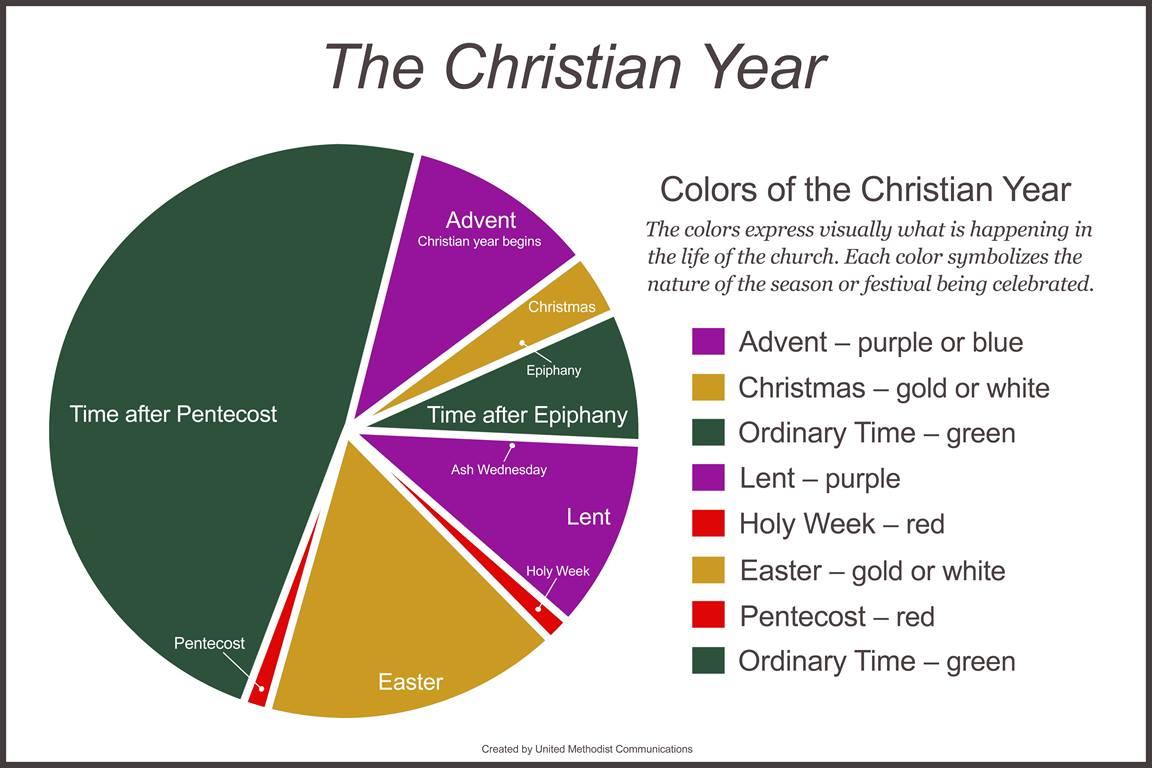
The Christian year includes the central seasons of Christmas and Easter followed by Ordinary Time. The colors associated with the different seasons express visually what is happening in the life of the church. Each color symbolizes the nature of the festival being celebrated. Graphic by Laurens Glass, United Methodist Communications.


The story of our salvation is retold every year through the observances in the Church Calendar. It begins with Advent (the coming) as we reflect on the Hebrew and Christian Scriptures.


John 3:16

God so loved the world that he gave his only Son, that whoever believes in him should not perish but have eternal life.


We look back in the Hebrew Scriptures to the prophet Isaiah who predicts what kind of a Savior the Father is sending us.


Isaiah 42:1-7


Behold my servant, whom I uphold, my chosen,

in whom my soul delights;
I have put my Spirit upon him;
    he will bring forth justice to the nations.
He will not cry aloud or lift up his voice,
    or make it heard in the street;
a bruised reed he will not break,
    and a faintly burning wick he will not quench;
    he will faithfully bring forth justice.
He will not grow faint or be discouraged
    till he has established justice in the earth;
    and the coastlands wait for his law.

Thus says God, the Lord,
    who created the heavens and stretched them out,
    who spread out the earth and what comes from it,
who gives breath to the people on it
    and spirit to those who walk in it:

“I am the Lord; I have called you in righteousness;
    I will take you by the hand and keep you;
I will give you as a covenant for the people,
    a light for the nations,
to open the eyes that are blind,
to bring out the prisoners from the dungeon,
    from the prison those who sit in darkness.


We turn to the Christian Scriptures to hear the story of the arrival of the Savior, Jesus Christ, as we celebrate the Feast of Christmas.


Matthew 1:18-23

Now the birth of Jesus Christ took place in this way. When his mother Mary had been betrothed to Joseph, before they came together, she was found to be with child from the Holy Spirit. And her husband Joseph, being a just man and unwilling to put her to shame, resolved to divorce her quietly. But as he considered these things, behold, an angel of the Lord appeared to him in a dream, saying, “Joseph, son of David, do not fear to take Mary as your wife, for that which is conceived in her is from the Holy Spirit. She will bear a son, and you shall call his name Jesus, for he will save his people from their sins.” All this took place to fulfill what the Lord had spoken by the prophet:

“Behold, the virgin shall conceive and bear a son, and they shall call his name Immanuel” (which means, God with us).                 

*************************

During the Advent/Christmas season, we try to bring the Spirit of Jesus into our current world. In the past, there were beautifully decorated churches, joyful Masses and Services, Christmas trees, gift-giving, random acts of kindness, cards or visits to relatives and friends, Christmas baskets and toys for the needy, Christmas shows, concerts, etc. 

This Christmas will be somewhat different. Rather than gathering together for Christmas parties, avoiding crowds and parties may be one of the best gifts we give one another to prevent the spread of the deadly virus.

However, we can still celebrate with the use of our creativity and technology. Virtual church services, Zoom gatherings, sending cards and gifts through the mail. With less money to spend, homemade cards and gifts may delight our loved ones. If you have the financial means, donating to help a family that does not have income would be appreciated. A telephone call might brighten someone’s day. 

Listening to Christmas carols can bring back happy memories. One of my favorites is ”O Holy Night.” Just taking the time to reflect on the words can bring Peace.”

‘O Holy Night’ is a timeless Christmas carol, composed by Adolphe Adam in 1847.

O holy night, the stars are brightly shining,

It is the night of the dear Saviour’s birth;
Long lay the world in sin and error pining,
'Till he appeared and the soul felt its worth.
A thrill of hope the weary world rejoices,
For yonder breaks a new and glorious morn;

Chorus
Fall on your knees, Oh hear the angel voices!
O night divine! O night when Christ was born.
O night, O holy night, O night divine.

Led by the light of Faith serenely beaming;
With glowing hearts by his cradle we stand:
So, led by light of a star sweetly gleaming,
Here come the wise men from Orient land,
The King of Kings lay thus in lowly manger,
In all our trials born to be our friend;

Chorus
He knows our need, To our weakness, no stranger!

Behold your King! Before Him lowly bend!
Behold your King! Your King! Before he bends!

Truly He taught us to love one another;
His law is Love, and His gospel is Peace;
Chains shall he break, for the slave is our brother,
And in his name, all oppression shall cease,
Sweet hymns of joy in grateful chorus raise we;
Let all within us praise his Holy name!

Chorus
Christ is the Lord, then ever! ever praise we!
His power and glory, evermore proclaim!


How are you going to make this Christmas special?


Have a Blessed Christmas and a Happy and Healthy New Year!


Comments:


Pat Chiaffa, ASBS

Our great and glorious God revealed his love for us by sending his beloved Son, Jesus, to dwell amongst us. Reverence, peace, and hope touch our hearts when we gaze upon the Nativity scene. We get a glimpse into the wonder of life. However, somewhere between the Stable and our return to daily living, many of us come to believe that Jesus came to respond to our personal needs. Rarely do we recognize that “Christ in our midst” is an “invitation from God inviting us to participate in God’s universal creative work,” as suggested by Father Richard Rohr.

In his letter to the Romans (19,22) St. Paul writes, “The whole of creation is eagerly waiting for the revelation of the sons and daughters of God…all creation is groaning in one great act of giving birth.”

Sr. Pat Bergen, CSJ, offers a present-day reflection on those verses, “all of creation is in labor waiting for us to wake up and realize the fullness of who we are called to be – Christ.” Sister is referring to Christ's consciousness. “To awaken to this consciousness is to awaken to the reality that the ‘breath of God’ is sustaining all that is. Therefore, everything belongs to and participates in God and God participates in all that is. This is Good News for the universe!”

No longer can I be content with passive contemplation of the loveliness of the birth event of the Redeemer of the world. I recognize that it is time for me to move beyond my “me-centeredness” to a sense of self that Sr. Bergen identifies as including “the whole cosmos – a sense of self that is one with God and one with all that is, was or ever will be.”

My prayer during this Advent and Christmas season is that I will discern the voice of Jesus as I ponder my response to the awareness of journeying into the fullness of Christ.

Let us adore the Christ Child by living in His love and rejoicing in the miracle of His birth. Sr. Annette, wishing you, your readers, and their loved ones, a blessed and peaceful Christmas. 


Stephanie Morris, Ph.D., ASBS, Historian, Certified archivist emerita

Our celebration of Christmas will be different this year for most of us.

Military families have been separated from loved ones for long periods and

often over holidays. We are fortunate that we can connect with family and friends

using technology. This season may be a little quieter and this may give us

some time to focus on the real meaning of Christmas.

We know "Jesus is the reason for the season" but how often do we talk to

the Infant King Who was born in poverty to give us the riches of salvation?

What gift did we get Jesus this year? A phone call to a shut-in relative or friend?

An extra Rosary for healing? Mother Katharine noted that Jesus came as an infant;

infants take small, "baby steps." We can take small steps in sharing

Christmas peace and joy with others.

Monday, January 13, 2020

Jan. 19, 2020 The Second Sunday of Ordinary Time A


Reading I: Isaiah 49: 3, 5-6
Psalm 40
Reading II: 1 Corinthians 1: 1-3
Gospel: John 1: 29-34

In today's Gospel, we find John the Baptist pointing out Jesus and calling him the "Lamb of God." I have always admired John and viewed him as a wonderful example for us as we strive to introduce people to Jesus and help them to focus on him.


I also love the title John gives Jesus. A lamb is a gentle animal and very lovable. We find Jesus to be a gentle, compassionate man eating with and welcoming sinners. He must have also been very lovable or he would not have drawn crowds to listen to him. Jesus is truly a "Lamb."


Also, from early times, lambs were the sacrifices offered to God in the spring as part of the first fruits, to acknowledge his sovereignty and man's complete dependence on him. They would even put the blood of the lamb they had offered on entrance of their house to show that they had made the sacrifice.


Later, when celebrating their rescue from slavery in Egypt, again a lamb was sacrificed in grateful remembrance of God deliverance from their oppressors. This Lamb would also save his Jewish people and all others from the oppression of sin by his sacrifice of himself on the cross.


Today at each Mass we commemorate Jesus' sacrifice as the Lamb or God in the breaking of the Bread. The following prayer is recited or sung:

            
Lamb of God, you who take away the sins of the world, 
have mercy on us.
Lamb of God, you who take away the sins of the world,
have mercy on us.
Lamb of God, you who take away the sins of the world,
grant us peace.

Finally, when the priest holds up the Host and invites us to communion with Jesus and one another, John the Baptist's words are again proclaimed:

Behold the Lamb of God,
Behold him who takes away the sins of the world.
Blessed are those called to the supper of the Lamb.

How very blessed we are to have such a gentle, loving, and sacrificing Savior!
May the Lamb of God be praised and adored forever!

Reflection Question: How can I show my appreciation to our Lord as the Lamb of God?


~Sr. Annette Marie


Spanish Translation

Lectura I: Isaiah 49: 3, 5-6
Salmo 40
Lectura II: 1 Corintio 1: 1-3
Evangelio: Juan 1: 29-34

En el Evangelio de hoy, encontramos a Juan el Bautista señalando a Jesús y llamándolo el "Cordero de Dios". Siempre he admirado a John y lo vi como un maravilloso ejemplo para nosotros mientras nos esforzamos por presentar a las personas a Jesús y ayudarles a enfocarse en él.


También me encanta el título que Juan le da a Jesús. Un cordero es un animal gentil y muy amable. Encontramos que Jesús es un hombre gentil y compasivo que come y da la bienvenida a los pecadores. También debe haber sido muy amable o no habría atraído multitudes para escucharlo. Jesús es verdaderamente un "Cordero".


Además, desde los primeros tiempos, los corderos eran los sacrificios ofrecidos a Dios en la primavera como parte de los primeros frutos, para reconocer su soberanía y la completa dependencia del hombre sobre él. Incluso pondrían la sangre del cordero que habían ofrecido en la entrada de su casa para demostrar que habían hecho el sacrificio.


Hoy en cada misa conmemoramos el sacrificio de Jesús como el Cordero o Dios en la fracción del pan. Se recita o canta la siguiente oración:


Cordero de Dios, tú que quitas los pecados del mundo,
ten piedad de nosotros.
Cordero de Dios, tú que quitas los pecados del mundo,
ten piedad de nosotros.
Cordero de Dios, tú que quitas los pecados del mundo,
Dadnos la paz.

Finalmente, cuando el sacerdote levanta la Hostia y nos invita a la comunión con Jesús y entre nosotros, las palabras de Juan el Bautista se proclaman nuevamente:
He aquí el Cordero de Dios
He aquí el que quita los pecados del mundo.
Bienaventurados los llamados a la cena del Cordero.


¡Cuán bendecidos somos de tener un Salvador tan gentil, amoroso y sacrificado!
¡Que el Cordero de Dios sea alabado y adorado para siempre!

Pregunta de reflexión: ¿Cómo puedo mostrar mi agradecimiento a nuestro Señor como el Cordero de Dios?


Comments

Stephanie Morris, ASBS, Ph.D Historian, Certified Archivist, Emerita
Our Lord was sacrificed on the cross for me, for us. How can I begin to really appreciate the idea of Someone who suffered great pain and died in a brutal way, just to give me eternal salvation? The best I can do is to say “thank you” in prayer and by passing His kindness along to others. As St. Katharine told us, we don’t have to do extraordinary deeds, but we can do our ordinary acts is an extraordinarily charitable way. Smile. Listen to someone who is lonely or hurting. If we let the Lamb of God lead us, we will know how we can show our gratitude to God.

Pat Chiaffa, ASBS
My lifetime friend, Ceilie, is authentically a gentle being. Time spent in her presence leaves me with the sense that I spent time with the closest model of the Blessed Mother that I can imagine. Ceilie is nurturing, caring and radiates goodness (God-ness). The positive energy of our get togethers stay with me the entire week following our visit. I embrace these special times as indication of God’s immense love for me to have blessed me with such a friend. Ceilie is an open conduit of God’s love and peace. I depart committed to being such a presence for others, though I too often fall short.

When I meet up with Jesus in the New Testament, I am drawn to His gentleness. Jesus acknowledges this trait in Himself in Matthew 11:29. “Take my yoke upon you and learn from me, for I am gentle and humble in heart, and you will find rest for your souls.”

My gratitude for the gift of Self that Jesus freely gave, that I may have eternal life, is equally felt for His continual gift of Self in the Blessed Sacrament. I am humbled by such love, mercy and compassion.

Jesus was also a Shepherd who tenderly gathered and led the sheep, carrying lost ones back to the flock tucked in his bosom.

I show my appreciation by becoming as a lamb, following Jesus and taking adequate time to develop a relationship with him, so like his sheep, I’ll know and heed his voice. “Draw near to God and He will draw near to you” (James 4:8).

This leads to true discipleship, which according to Guidepost contributor, Sharon Hinck, requires “interacting with Him constantly; remembering His teaching, listening for His direction, opening our eyes to where He is at work in our home and community.” Jesus helps us adjust our activities and change course when necessary, so we can become the person God created us to be, and to live the life God created us to live.

Lamb of God, who takes away the sin of the world, transform my thoughts, attitudes, and actions so that I may become an authentic reflection of Your love to others.

Monday, August 19, 2019

August 25, 2019 The Lord’s Loving Discipline


Reading I:
 
Isaiah 66:18-21

Psalm: 117

Reading II: 
Hebrews
12:5-7, 11-13

Gospel: 
Luke 13:22-30


In today’s Gospel, we find Jesus traveling toward Jerusalem where He will soon be paying the ultimate price for our redemption on the cross. While teaching and preaching to people, He is aware that this will be His last opportunity, in His human form, to impress upon them the importance of 
taking His words seriously if they wish to join Him in heaven when they die. Just associating with Him will not be sufficient to gain a heavenly reward.

The second reading, the Epistle (letter) to the Hebrews, reflects upon the ideas in Proverbs 3:11-12 in the Hebrew Scriptures (Old Testament). The unknown author (possibly Priscilla or Barnabas) says: “My son, do not disdain the discipline of the Lord or lose heart when reproved by Him, for whom the Lord loves, He disciplines.”  The writer notes that discipline can seem painful, but its fruits are peace and holiness.

In his preaching, Jesus calls for faith in Him, repentance for sin, and observance of His Commandments, especially his commandment of love. Jesus has designed a special path for us to follow to lead us to our heavenly home with Him. He asks that His followers make a firm commitment to follow that path so that when they knock on Heaven’s Door, it will be opened for them.

Jesus said of Himself: “I am the Way, the Truth and the Life.” The more we spend time with Jesus in Bible study and prayer, the more we learn about Him and how to live our own lives.

I have a favorite story called The Great Stone Face, by Nathaniel Hawthorne. It is about a little boy, named Earnest, who lived by the White Mountains in New Hampshire where there was a formation on the side of a mountain which resembled a man’s strong, benevolent face.

There was a prediction that someday a man with a face resembling this stone face would come and help the little town. For years, people waited and sometimes mistakenly thought that the man had come, only to be disappointed. Little Earnest in the meantime used to study the face regularly and grew into a young man. Finally, his resemblance to the Great Stone Face became recognized.

I had the privilege of seeing the “Old Man of the Mountain” image on the side of the mountain before it had to be taken down because it was posing a danger of pieces falling and injuring people. It always reminded me that if we study Jesus on a regular basis, we can end up resembling Him.

Most of us at one time or another have been asked by a well-meaning person: “Are you saved?”  Expecting a “Yes” or “No” answer, they are often surprised when a Catholic responds, “I am trying to live a good Christian life, and Jesus will be my judge.” While we know that Jesus understands our weaknesses and is very merciful, still He expects us to take His words seriously and do the very best we can.

 Reflection Question:  How can I make time to regularly study Jesus in the Bible so that I can develop a personal relationship with Him, and then grow to become like Him?


Spanish Translation of Reflection Above...
La Disciplina Amorosa del Señor


En el Evangelio de hoy, encontramos a Jesús viajando hacia Jerusalén, donde pronto pagará el precio máximo por nuestra redención en la cruz. Mientras enseña y predica a las personas, es consciente de que esta será su última oportunidad, en su forma humana, para inculcarles la importancia de tomar sus palabras en serio si desean unirse a Él en el cielo cuando mueran. Solo asociarse con Él no será suficiente para obtener una recompensa celestial.

La segunda lectura, la Epístol (carta) a los Hebreos,  reflexiona sobre las ideas en Proverbios 3: 11-12 en las Escrituras Hebreas (Antiguo Testamento). The unknown author (possibly Priscilla or Barnabas) says: Hijo mío, no desdeñes la disciplina del Señor ni te desanimes cuando sea reprendido por Él, a quien el Señor ama, Él disciplina”.  El escritor señala que la disciplina puede parecer dolorosa, pero sus frutos son la paz y la santidad.

En su predicación, Jesús pide fe en él, arrepentimiento por el pecado y observancia de sus mandamientos, especialmente su mandamiento de amor. Jesús ha diseñado un camino especial que debemos seguir para llevarnos a nuestro hogar celestial con Él. Pide que sus seguidores se comprometan firmemente a seguir ese camino para que cuando llamen a Heaven's Door se les abra.

Jesús dijo de sí mismo: “Yo soy el camino, la verdad y la vida”. Cuanto más tiempo pasamos con Jesús en el estudio de la Biblia y la oración, más aprendemos acerca de Él y cómo vivir nuestras propias vidas.

Tengo una historia favorita llamada La Gran Cara de Piedra, by Nathaniel Hawthorne. Se trata de un niño pequeño, llamado Ernesto, que vivía junto a las Montañas Blancas en New Hampshire, donde había una formación en la ladera de una montaña que se parecía al rostro fuerte y benevolente de un hombre.

Había una predicción de que algún día un hombre con una cara similar a esta cara de piedra vendría y ayudaría a la pequeña ciudad. Durante años, la gente esperó y, a veces, erróneamente pensó que el hombre había venido, solo para decepcionarse. Mientras tanto, Little Earnest solía estudiar la cara regularmente y se convirtió en un hombre joven. Finalmente, su parecido con el Gran Rostro de Piedra fue reconocido.

Tuve el privilegio de ver esta imagen en la ladera de la montaña antes de tener que desmontarla porque representaba el peligro de que se cayeran piezas e hirieran a las personas. Siempre me recordó que si estudiamos a Jesús regularmente, podemos terminar pareciéndonos a Él.

La mayoría de nosotros en un momento u otro nos ha preguntado una persona bien intencionada: “¿Estás salvado?” Esperando una respuesta de “Sí” o “No” a menudo se sorprenden cuando un católico responde: “Estoy tratando de vivir una buena vida cristiana, y Jesús será mi juez”. Si bien sabemos que Jesús entiende nuestras debilidades y es muy misericordioso, todavía espera que tomemos sus palabras en serio y hagamos lo mejor que podamos.

 Pregunta de Reflexión:   ¿Cómo puedo hacer tiempo para estudiar regularmente a Jesús en la Biblia para poder desarrollar una relación personal con Él y luego llegar a ser como Él?


Comments:
Stephanie Morris, Ph. D, Historian, Certified Archivist, emerita
Do you have a few quiet moments with your cup of coffee or tea, when you might think about this week’s menu or draft a memo? Could you start these quiet moments with a brief review of that day’s scriptural readings or with a psalm? You can find the daily readings on the website of the United States Conference of Catholic Bishops; this site has audio versions – they will read the scripture to you. Do you have some sacred songs on your playlist? Do you have a few favorite hymns? Can you spend a few minutes thinking about some of the special meanings a phrase or refrain has for you? God has given us 24 hours today; can we give Him a few extra minutes?

Pat Chiaffa, ASBS
I have mentioned before how very much I cherish my morning time alone with the Lord, my “Jesus and Java time” as I like to refer to it. My day starts around 4:00 am, and it always goes much better when I start the day nourished with reflection on His Word. My Type A personality drives me to cling to schedules, and sometimes it is obsessive. But when it comes to creating space to optimize my prayer time, my routine grounds me. What works for me is to set aside a specific time and place each day, to have my Bible and devotionals in place, and to set my intention every time I begin.
My kitchen table is the meeting spot where I connect with Jesus each morning. It is quiet, comfortable, and I find that sitting upright in a hard-back chair keeps me focused and alert. My Bible and daily devotionals remain on the table just fingertips away. My intention is to hear the message, relevant word or phrase that God wants me to hear for that day. My day is off to a gentle, peaceful start…and then my morning commute begins. During my drive to work, I play a CD of the Rosary that keeps me prayerful as I navigate through the morning rush hour. Instead of cussing at those aggressive drivers that cut me off, pass me by or plant themselves firmly on my bumper, I assail them with a Hail Mary. Now take that and have a blessed day you maniac!
The morning readings often come to mind during the day, and, as a result of long-term adherence to this spiritual practice, I am more conscious of Christ’s Presence in my life and in the world. Conversation with the Lord, while driving to work, performing tasks at the office, carrying out household chores and errands, and any activity in which I am involved, is comfortable. I ask Jesus how He would like me to handle situations. This practice helps me to respond respectfully and responsibly to people and circumstances. My desire is to be more Christ-like in all my interactions.
Episcopal priest Matthew Fox writes: “There is something in everyone …that waits, listens for the sound of the genuine in yourself and if you cannot hear it, you will never find whatever it is for which you are searching.”  I believe this to be true and regard the process of waiting and listening as moving toward becoming the person I was created to be. For me, entering into solitude is a necessity if I am to quiet the chatter in my mind long enough to allow for connecting with and befriending Spirit who will guide me ever closer to Jesus and to my
true self.

Monday, August 12, 2019

August 18, 2019 Challenges of Jesus

August 18, 2019   Challenges of Jesus - Year C

Reading I: 
Jeremiah 38:4-6, 8-10

Psalm:  40

Readings II:  Hebrews 12:1-4

Gospel:  Luke 12:49-53

Are you ever surprised that sometimes when you look at a situation, yet another person sees the same thing, but interprets it very differently from you? Well, this is not something new.

Jesus, Himself, had that same experience. In the Gospel of John (7:41). Jesus was preaching to some people who were so impressed that they believed Him to be long-awaited Messiah. Others in the group did not believe that He could be the Christ because He came from Galilee, and they argued that He was supposed to come from Bethlehem.

When Jesus cured a blind man on the Sabbath (Jn 9:16), some claimed that if He wouldn’t observe the Sabbath, He couldn’t be from God. On the other hand, other people believed that He had to be of God to be able to perform the miracle. 

In spite of the fact that Jesus’ mission was to bring about a Kingdom of His Father, characterized by unity and love, He experienced discord. Jesus strove to be a unifier. His message was one of love. It must have been so painful for Him to have Himself, His preaching and compassion misunderstood. 

Jesus expressed His grief in the following words: “Jerusalem, Jerusalem, you that kill the prophets and stone those who are sent to you. How often have I longed to gather your children as a hen gathers her chicks under her wings and you refused.” (Mt 3:37) When I had the privilege of sitting on a rock in the Garden of Gethsemane overlooking Jerusalem, those words came to me and touched me deeply.

Division can be very painful. Today, devout parents who brought up their children with faith grieve when those children turn away from their faith. The pain of seeing their beloved grandchildren deprived of what is so important for their long-term happiness is difficult to witness.

There is a normal tendency for teens and young adults to assert their independence in a variety of ways. I can recall when I was in high school that I decided that I would not be a Catholic just because my parents were. I read books on apologetics (defending the faith) which led me to embrace the faith personally. Of course, the Holy Spirit also was guiding me.

However, today there is also the disillusionment from scandals related to clergy misconduct and some peoples’ sense that they do not need God. Sometimes, they are brought back to faith when they mature and realize the weakness of human nature and/or they have hardships which make them turn back to God for help.

What can we do? In the meantime, we are to love them, pray for them, and give them the example of a truly faith-filled person. A favorite prayer of mine is “Lord, into your hands I commend __________’s spirit.”

 Reflection Question:  Is there someone who is struggling with faith issues for whom you can pray or offer help?


Spanish Translation of Reflection Above...
Desafíos de Jesús


¿Alguna vez te sorprende que a veces cuando miras una situación, otra persona ve lo mismo, pero lo interpreta de manera muy diferente a ti? Bueno, esto no es algo nuevo.

Jesús mismo tuvo esa misma experiencia. En el Evangelio de Juan (7:41). Jesús estaba predicando a algunas personas que estaban tan impresionadas que creían que era el Mesías tan esperado. Otros en el grupo no creían que Él podría ser el Cristo porque vino de Galilea y argumentaron que se suponía que debía venir de Belén.

Cuando Jesús curó a un ciego en sábado (Jn 9:16), algunos afirmaron que si no observaba el sábado, no podría ser de Dios. Por otro lado, otras personas creían que tenía que ser de Dios para poder realizar el milagro.

A pesar de que la misión de Jesús era lograr un Reino de su Padre, caracterizado por la unidad y el amor, experimentó discordia. Jesús se esforzó por ser unificador.  Su mensaje fue de amor. Debe haber sido tan doloroso para Él haberse entendido mal, su predicación y compasión.

Jesús expresó su dolor en las siguientes palabras: Jerusalén, Jerusalén, tú que matas a los profetas y apedreas a los que te son enviados. “Cuántas veces he anhelado reunir a tus hijos cuando una gallina junta sus polluelos bajo sus alas y tú te niegas”. (Mt 3:37) Cuando tuve el privilegio de sentarme en una roca en el Jardín de Getsemaní con vista a Jerusalén, esas palabras me llegaron y me conmovieron profundamente.

La división puede ser muy dolorosa. Hoy, los padres devotos que criaron a sus hijos con fe se afligen cuando esos niños se alejan de su fe. Es difícil presenciar el dolor de ver a sus queridos nietos privados de lo que es tan importante para su felicidad a largo plazo.

Hay una tendencia normal para que los adolescentes y adultos jóvenes afirmen su independencia de varias maneras. Puedo recordar cuando estaba en la escuela secundaria que decidí que no sería católica solo porque mis padres lo eran. Leí libros sobre apologética (defender la fe) que me llevaron a abrazar la fe personalmente. Por supuesto, el Espíritu Santo también me estaba guiando.

Sin embargo, hoy también existe la desilusión de los escándalos relacionados con la mala conducta del clero y la sensación de algunas personas de que no necesitan a Dios. A veces, vuelven a la fe cuando maduran y se dan cuenta de la debilidad de la naturaleza humana y / o tienen dificultades que los hacen volver a Dios en busca de ayuda.

¿Qué podemos hacer? Mientras tanto, debemos amarlos, orar por ellos y darles el ejemplo de una persona verdaderamente llena de fe. Una de mis oraciones favoritas es Señor, en tus manos encomiendo el espíritu de __________”.

 Pregunta de Reflexión:  ¿Hay alguien que está luchando con problemas de fe por los cuales puede orar u ofrecer ayuda?


Comments:
Stephanie Morris, Ph. D, Historian, Certified Archivist, emerita
We can always pray for family and friends without giving God details of specific needs – He knows already. We just need to ask God to help them. We can assist those struggling with faith issues by being a good example of what a “faith-filled” person is/ does. Strengthen our own personal faith so that it shines like a lighthouse, radiating God’s love and mercy. If someone asks you a question about faith, listen to what and how they ask. Answer their question and guide them from what they know and feel to knowing God’s love and feeling God’s mercy.

Pat Chiaffa, ASBS
I really appreciate the prayer you shared with us. I am one of the grieving parents you mention whose children have turned away from the faith.  Thus, I will name each of my sons in commending their spirits to Our Lord. What I find uplifting about this prayer is that I release my control of the outcome, trusting that God will meet the unique needs of each person for whom I pray. I include my mother, knowing that God knows my concern for her health and ease of daily living. I name my estranged sister hoping for healing and connection.  It is a wonderful prayer to whisper for all those for whom I have promised to pray. I am finding this aspiration very freeing to recite when I am feeling aversion toward leaders who abuse their status and make decisions that put the lives of innocent victims at risk.  I experience greater inner peace when, instead of complaining about someone or getting worked up about an issue, I offer that person or cause in prayer to Our Lord who loves us all unconditionally. 
In his recent series entitled, “Black Women Mystics,” Richard Rohr highlighted the writings of Dr. Diana L. Hayes, the first African American woman to earn a Pontifical Doctorate in Theology. Dr. Hayes writes, “This is our calling as Christian faithful: to recognize the Christ in everyone. And to reach out a hand of hope, to speak a word of love, to sing a song of happiness, to share a tear of joy or pain, to speak a word of praise, to murmur a prayer, to stand together against those forces that would divide us, isolate us, and block our flow toward home.”
Dr. Hayes cites Micah 6:8 as the basis for her belief: 
       You have been told…what is good
       And what the Lord requires of you:
       Only to do the right and to love goodness,
       And to walk humbly with your God.
As I journey through life, troubled by the appearance of darkness, and dismayed at the incomprehensible acts we commit against one another, it is easy to get drawn into the negative energy that surrounds me. It is, therefore, good to recall the Scripture passage from Micah often, knowing my peace depends on my ability to keep my focus on Christ’s Light and Love. Centered in Christ’s love, I am able to resist the temptation to react to the ill behaviors of others and recognize within them the suffering Christ. From a place of compassion, I commend their Spirit to the Lord, our true Source of hope and healing.
Imagine how lovely the global landscape would be if all Christians embraced and embodied the call to “recognize the Christ in everyone.”