Showing posts with label heaven. Show all posts

Monday, November 4, 2019

Nov. 10, 2019 God of the Living

November 10, 2019   God of the Living   Year C

Reading I:   2 Maccabees 
7:1-2, 9-14

Psalm: 17

Reading II:  2 Thessalonians
2:16-3:5

Gospel:  Luke 20:27-38

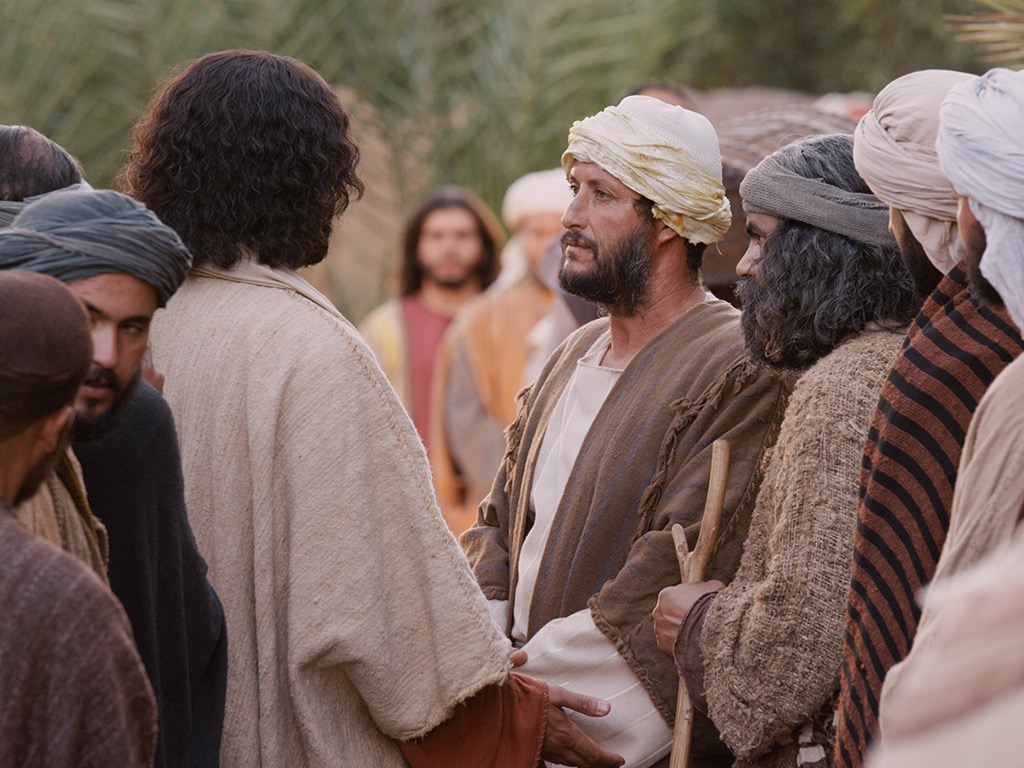
In today’s Gospel, we find the Sadducees challenging Jesus. The Sadducees were Jews who did not believe in the resurrection of the dead. Therefore, in an effort to discredit Jesus’ teachings, they posed a question to Him.

The Sadducees presented a situation about a widow whose husband had died leaving her childless.  They then referred to Moses’ instruction that if a man were left without an heir, one of his brothers was to marry his wife and raise up descendants for his deceased brother.

In the widower’s family there were seven brothers. Each time one of the brothers married this woman they would die leaving the widow childless. The big question that they asked of Jesus was “At the Resurrection, whose wife will that woman be? ...for all seven had been married to her.”

Jesus responded, “The children of this age marry and remarry: but those who are deemed worthy to attain to the coming age and to the resurrection of the dead neither marry nor are given in marriage. They can no longer die, for they are like angels; and they are the children of God because they are the ones who will rise. That the dead will rise, even Moses made known in the passage about the bush, when he called out ‘Lord’ the God of Abraham, the God of Isaac, and the God of Jacob; and He is  not God of the dead, but of the living, for to Him all are alive.” (Luke 20:37-38)

As fall begins, we see the leaves on many trees dying. In fact, the bare trees give the impression of being dead. However, in the spring we see new life as flowers and leaves bud forth. It is during the spring that we celebrate Easter, the Resurrection of Jesus and His promise that we too will be raised up to new life.

I recall that when I taught sixth-graders and talked about heaven, some thought heaven would be boring. Perhaps, they thought that they would be singing “Glory to God in the Highest” all the time like the angels at Christmas time.

I did a questioning exercise with them to dispel their assumptions. First, I asked them what would make a baby happy. Some answers were a rattle or playing Peek-a-Boo. Then I asked what would make a five-year-old happy? Some responses were a doll or a truck. Then I moved up to a twelve-year-old. A bicycle and a basketball were mentioned. (When I was a young teacher, video games, etc. had not yet been invented.) The children got the point that at different times in our lives, the things that make us happy change.

Finally, I explained that when we die there will be new things that will make us happy. Scripture says: “What no one ever saw or heard, what no one ever thought could happen, is the very thing God prepared for those who love Him.” (1 Corinthians 9)

Often times, I have noted that some people have very difficult lives here on earth. It gives me consolation to know that they have the afterlife with the Lord to anticipate.

In the first reading, we hear of the seven brothers and their mother who were tortured in order to force them to eat pork, which was against the law of God at that time. At the point of death, one brother said, “You accursed fiend, you are depriving us of this present life, but the King of the world will raise us up to live again forever.”

 Reflection Question:  Is the belief in an afterlife a consolation to you?  If so, why?

Spanish Translation of Reflection Above...
Dios de la vida


En el Evangelio de hoy, encontramos a los saduceos desafiando a Jesús. Los saduceos eran judíos que no creían en la resurrección de los muertos. Por lo tanto, en un esfuerzo por desacreditar las enseñanzas de Jesús, le hicieron una pregunta.

Los saduceos presentaron una situación sobre una viuda cuyo esposo había muerto dejándola sin hijos. Luego se refirieron a las instrucciones de Moisés de que si un hombre se quedaba sin heredero, uno de sus hermanos debía casarse con su esposa y criar descendientes para su hermano fallecido.

En la familia del viudo había siete hermanos. Cada vez que uno de los hermanos se casaba con esta mujer, moría dejando a la viuda sin hijos. La gran pregunta que le hicieron a Jesús fue “En la resurrección, ¿de quién será esa mujer esa esposa? ... porque los siete se habían casado con ella”.

Jesús respondió: Los hijos de esta edad se casan y se vuelven a casar: pero los que se consideran dignos de alcanzar para la edad venidera y para la resurrección de los muertos no se casan ni se dan en matrimonio. Ya no pueden morir, porque son como ángeles; y ellos son los hijos de Dios porque ellos son los que resucitarán. Que los muertos resucitarán, incluso Moisés dio a conocer en el pasaje sobre la zarza, cuando llamó al ‘Señor’, el Dios de Abraham, el Dios de Isaac y el Dios de Jacob; y no es Dios de los muertos, sino de los vivos, porque para él todos están vivos”. (Lucas 20:37-38)

Cuando comienza el otoño, vemos morir las hojas de muchos árboles. De hecho, los árboles desnudos dan la impresión de estar muertos. Sin embargo, en la primavera vemos una nueva vida a medida que brotan las flores y las hojas. Es durante la primavera que celebramos la Pascua, la resurrección de Jesús y su promesa de que nosotros también seremos resucitados a una nueva vida.

Recuerdo que cuando enseñé a alumnos de sexto grado y hablé sobre el cielo, algunos pensaron que el cielo sería aburrido. Tal vez, pensaron que estarían cantando “Gloria a Dios en las alturas” todo el tiempo como los ángeles en Navidad.

Hice un ejercicio de preguntas con ellos para disipar sus suposiciones. Primero, les pregunté qué haría feliz a un bebé. Algunas respuestas fueron un sonajero o jugar Peek-a-Boo. Luego pregunté qué haría feliz a un niño de cinco años. Algunas respuestas fueron una muñeca o un camión. Luego me mudé a un niño de doce años. Se mencionaron una bicicleta y una pelota de baloncesto.  (Cuando era un joven maestro, los videojuegos, etc., aún no se habían inventado). Los niños entendieron que en diferentes momentos de nuestras vidas, las cosas que nos hacen felices cambian.

Finalmente, le expliqué que cuando muramos habrá cosas nuevas que nos harán felices. La escritura dice: “Lo que nadie vio ni escuchó, lo que nadie pensó que podría suceder, es lo que Dios preparó para aquellos que lo aman”. (1 Corintios 9)

Muchas veces, he notado que algunas personas tienen vidas muy difíciles aquí en la tierra. Me consuela saber que tienen una vida futura con el Señor para anticipar.

En la primera lectura, escuchamos de los siete hermanos y su madre que fueron torturados para obligarlos a comer carne de cerdo, lo que estaba en contra de la ley de Dios en ese momento. En el momento de la muerte, un hermano dijo: “Maldito demonio, nos estás privando de esta vida presente, pero el Rey del mundo nos resucitará para vivir de nuevo para siempre”.

 Pregunta de Reflexíon:  ¿Es la creencia en una vida futura un consuelo para ti? Si es así, ¿por qué?


Comments:


Stephanie Morris, Ph. D, Historian, Certified Archivist, emerita

As a child, did you ever tell your mother: “The teacher wasn’t fair – she punished the entire class for something one kid did”?  And did your mother then say: “The world isn’t fair”? Pilate found Jesus “innocent,” yet Jesus was scourged, crowned with thorns and cruelly crucified. That hardly seemed “fair.” But we, with the eyes of faith, see that Jesus’ sacrifice was necessary open the gates of heaven to all.  Mother Katharine noted that “Heaven is our home, we were made for it.” Whatever happens to us here on earth is insignificant; what matters is how we use every minute of our earthly life to prepare us for our return home, to heaven.

Pat Chiaffa, ASBS

Annually, the season of Autumn invites me to explore the myriad of feelings that stir within me every time I witness the exquisite colors of the leaves, and subsequently watch them fall from their life source to the ground where they dry and wither. I’ve yet to delve deep enough to reflect on the richness of the interior awareness resulting from observing the breathtaking hues of red and orange leaves leading to the barrenness of the tree on which they once thrived. I notice the change in light and the increasing prevalence of darkness, which tends to dull my senses. At one level, these changes address my vulnerability to the forces of nature as I progress from being actively engaged in many areas of life, to slowing down physically, and enter into the autumn years of the life cycle. In 2 Corinthians 4:16, Paul writes, “Though our outer self is wasting away, our inner self is being renewed day by day.” There is a grace, a sacredness of sorts, which permeates the crisp autumnal air.

The feasts of All Saints and All Souls remind me that there is more to ponder. What are my thoughts about life after death…am I anticipating eternal life?  What does that mean to me? How should my beliefs influence how I choose to live out my autumn years?

For six decades, I have been affirming a belief in life everlasting with every recitation of the Apostles Creed. The Bible has multiple references to eternal life. My most cherished one is from John 3:16, “For God so loved the world that he gave his only begotten Son, that whosoever believes in him should not perish, but have everlasting life.”  The lives of the Saints all point to a belief in life after death.

One perspective I am very at ease with is that of Father Joseph Boyle who states, “I expect death to be a transition. I think it is a movement into a space that is not limited by our body and our senses that are quite limited now. I like the phrase in St. Paul, that we will ‘see God face to face’ [1 Corinthians 13:12] and we’ll relate to people and the beauty of who they are without the ego-agendas we have right now.

I see [life after death] as infinite love, as if the whole atmosphere of heaven is filled with God…I think that we are going to see and know each other in God…It strikes me as a homecoming, us returning home to where we come from…and all of our brothers and sisters are coming home as well…I certainly have a very deep hope that it is a transition into an incredible related life.”

People who have had near death experiences report being in the presence of a brilliant light, from which they felt tremendous warmth, peace and love surrounding them. Many report seeing loved ones. 

My faith, prayers, Scripture studies, and the lives of the saints, provide enough support for me to believe that God will deliver on his promise of eternal life. Therefore, I live each day in anticipation of eternity.  I once heard the suggestion that we should live each day as if it were our last day of life. I think that’s good advice for those of us with the goal of living in eternity.

Monday, July 29, 2019

August 4, 2019 _ Treasures in Heaven

August 4, 2019  Treasures in Heaven  - Year C


Reading I:   Ecclesiastes
1:2, 2:21-23

Psalm:  90

Reading II:  Colossians 3:
1-5, 9-11

Gospel: 
Luke 12:13-21


In today’s Gospel of Luke, we hear Jesus teaching his followers about the foolishness of being greedy. He tells a parable (a story to teach a lesson) about a rich farmer who is doing well and has barns totally filled. He decides to tear down his barns and build larger ones to hold more grain and other possessions. 

Then he says to himself: “Now as for you, you have so many good things stored up for many years, rest, eat, drink, be merry!”  However, God says to him, “You fool, this night your life will be demanded of you; and the things you have prepared, to whom will they belong?”

What are some other reasons that focus on making large amounts of money, hoarding things, or seeking after fame or popularity is foolish? First, our life here is short. If we spend our time and energies on such things, we will miss out on the important things asked of us by our Creator: to love Him, our neighbor, and ourselves.

Today, it seems as if we are being encouraged to focus on worldly things. In particular, I recall the TV program called ‘Lifestyles of the Rich and Famous.’ That came into my mind one day as I was walking through a park with a little girl who looked up at me and asked: “Would you like to be rich and famous?” When I responded that I was not interested in that, she remained quiet. That response probably surprised her since wealth and prestige seemed to be what people desire.

In Matthew’s Gospel, he lists the teachings of Jesus in a meaningful way. Regarding the pursuit of riches, he says:
       
       Do not store up riches for yourselves where on earth, where 
       moths and rust destroy, and robbers break in and steal. 
       Instead, store up riches for yourselves in heaven, where moths 
       and rust cannot destroy, and robbers cannot break in and 
       steal.  For your heart will always be where your riches are.                                                                                              — Matthew 6:19

Matthew vividly describes the Final Judgment. Jesus is pictured as a King on his throne. People of all nations are gathered before Him. He separates them into two groups. On His right, He puts the righteous and says: “Come you are blessed by my Father!  Come and possess the Kingdom which has been prepared for you ever since the creation of the world. I was hungry and you fed me, thirsty and you gave me to drink; I was a stranger and you received me in your homes, naked and you clothed me; I was sick and you cared for me; in prison and you visited me.’

The righteous will respond by asking when they came to the aid of the King.  His reply will be: ‘I tell you, whenever you did this for one of the least important of these brothers of mine, you did it for me!’

Then he will say to those on his left, ‘Away from me, you that are under God’s curse! Away to the eternal fire which has been prepared for the Devil and his angels!  I was hungry, but you would not feed me, thirsty…, I tell you, whenever you refused to help one of these least important ones, you refused to help me.’ These, then, will be sent off to eternal punishment, but the righteous will go to eternal life.”   
                                       — Matthew 25:34-46


 Reflection Question:   Which work of mercy to you feel called to perform this coming week?


Spanish Translation of Reflection Above...

Tesoros en el Cielo

Jesús enseñando a sus seguidores acerca de la insensatez de ser codicioso. Él cuenta una parábola (una historia para enseñar una lección) sobre un granjero rico que está bien y tiene graneros totalmente llenos. Decide derribar sus graneros y construir otros más grandes para contener más granos y otras posesiones.

Entonces se dice a sí mismo: “Ahora, en cuanto a ti, tienes muchas cosas buenas almacenadas durante muchos años, descansa, come, bebe, ¡sé feliz!”  Sin embargo, Dios le dice:“Tonto, esta noche tu vida te será exigida; y las cosas que has preparado, ¿a quién van a pertenecer?”

¿Cuáles son algunas otras razones que se centran en hacer grandes cantidades de dinero, acaparar cosas o buscar fama o popularidad es una tontería? Primero, nuestra vida aquí es corta. Si dedicamos nuestro tiempo y energía a tales cosas, perderemos las cosas importantes que nos pide nuestro Creador: amarlo a Él, a nuestro prójimo y a nosotros mismos.

Hoy en día, parece que estamos siendo alentados a enfocarnos en cosas mundanas. En particular, recuerdo el programa de televisión llamado ‘Estilos de vida de los ricos y famosos’. Eso me vino a la mente un día mientras caminaba por un parque con una niña que me miró y me preguntó: “¿Te gustaría ser rico y famoso?” Cuando respondí que no estaba interesada en eso, ella se quedó callada. Esa respuesta probablemente la sorprendió ya que la riqueza y el prestigio parecían ser lo que la gente deseaba.

En el Evangelio de Mateo, él enumera las enseñanzas de Jesús de una manera significativa. Respecto a la búsqueda de riquezas, dice:

       No se acumulen riquezas para ustedes mismos donde en la tierra, donde
       las polillas y el óxido destruyen, y los ladrones entran y roban.
       En su lugar, acumule riquezas para ustedes en el cielo, donde las polillas
       y el óxido no puede destruir, y los ladrones no pueden entrar y
       robar. Porque tu corazón siempre estará donde están tus riquezas.                                                                                            — Mateo 6:19

Mateo describe vívidamente el Juicio Final. Jesús es representado como un rey en su trono. La gente de todas las naciones están reunidas delante de él. Los separa en dos grupos. A su derecha, Él pone a los justos y dice: “¡Ven, eres bendecido por mi Padre! Ven y posee el Reino que ha sido preparado para ti desde la creación del mundo. Tuve hambre y me alimentaste, sed y me diste de beber; Fui forastero y me recibiste en tus casas, desnudo y me vestiste; Yo estaba enferma, y ​​tu cuidaste de mi; En la cárcel y tú me visitaste’.

Los justos responderán preguntando cuándo acudieron en ayuda del rey. Su respuesta será: ‘Te digo, siempre que hiciste esto por uno de los menos importantes de estos hermanos míos, ¡lo hiciste por mí!’

Entonces dirá a los de su izquierda: “¡Fuera de mí, tú que estás bajo la maldición de Dios! ¡Fuera el fuego eterno que ha sido preparado para el diablo y sus ángeles! Tenía hambre, pero no me darías de comer, sed ... te digo que siempre que te niegues a ayudar a uno de los menos importantes, me niegas a ayudarme. "Estos, entonces, serán enviados al castigo eterno, pero los justos irán a la vida eterna”.
                                       — Mateo 25:34-46


 Pregunta de Reflexión:   ¿Qué trabajo de misericordia te sientes llamado a realizar esta próxima semana?


Comments:
Stephanie Morris, Ph. D, Historian, Certified Archivist, emerita
Mother Katharine said that “There is nothing little in what is done for God.” An “act of mercy” can be something as small as calling or sending a cheery card to an elderly or infirm neighbor. Returning a shopping cart to the store or to the nearest “cart lot” for a woman who has just placed her child and her groceries in her car is a simple act of mercy.

Pat Chiaffa, ASBS
Last Sunday my mother, her neighbor, and I went to brunch at the retirement community into which she will soon be moving. A resident named Betsy joined us at the table. After I got mom’s food plated, I headed to the buffet table to select my food. I saw Betsy struggling to balance plates on the seat of her Rollator, and I asked if I could help her. She gratefully accepted. Once we settled in at our table, I asked Betsy to tell us something about herself. Her response was a real fork dropper as she replied, “I am a Holocaust Survivor.” She certainly had our attention. Betsy’s story is one of pain, abuse, starvation, loss and triumph.
The Nazis invaded Amsterdam when Betsy was four years old. She spent the next 5 years in hiding and in encampments, gaining freedom when she was ten years old. She “missed out” on childhood, and up to that time, she had never been to school.  Betsy knew excruciating hunger. Death and devastation were etched in her mind, heart, and soul. In spite of all that horror, she made the decision to greet each day with thanks and the wonder of being alive.  Her entire family was executed in Auschwitz.  Betsy related details of atrocities that tore at my heart. 
A network of farmers hid Betsy and her family, shared their meager food rations and offered moral support.  As she spoke, I thought of how those brave individuals, who were primarily Christians, fulfilled the works of mercy and were Good Samaritans to their Jewish brethren.  The Nazis threatened to burn down their farms if the farmers were harboring Jews.  Yet, the network remained active. The farmers were willing to lay down their lives and their livelihoods to protect their neighbors.
Betsy’s story reminded me of Anne Frank’s story. Anne and her family were hidden for two years before being discovered and transported to death camps.  I also thought of Corrie ten Boom who hid hundreds of Jews in her family home to protect them from arrest by the Nazis. When their activities were discovered, the entire ten Boom family was deported to concentration camps. The ten Boom’s were ardent Christians; their faith inspired them to serve their community, and while imprisoned Corrie and her sister, Betsy, spent evenings in the concentration camp sharing Scripture stories with their fellow Jewish inmates.  Corrie was the only family member to survive.  Her family paid the ultimate price to shelter and nourish Christ’s brothers and sisters.
As for Betsy, when the war ended, she was placed in a United States sponsored shelter where she received her grade school education. She excelled in her studies and was, likewise, sponsored for high school. She went on to earn a Master’s Degree in teaching. She enjoyed a career as a college professor, engaging students and professors alike as she shared personal experiences of the Holocaust. She pledged to keep her story alive so that no one forgets the consequences of hate. As we were getting ready to go, Betsy grasped my hand and shared with me that she was feeling great sadness. Her husband had suffered a stroke twelve days prior and was not making much progress. There were days when he did not even recognize her.  I promised to pray for his recovery. She thanked me. The connection that results from such an exchange is nothing short of divine.
Betsy’s story stays with me. I can only hope that fear would not prevent me from acting in a Christ-like manner. The work of mercy I feel called to do this week is to recognize the suffering Christ in all those who call out for help and to take appropriate steps to alleviate their pain. I yearn to hear the words of Jesus, “Come possess the Kingdom.” 

Monday, October 8, 2018

Oct. 14, 2018 - The Rich Young Man

The Twenty-Eighth Sunday in Ordinary Time  - Year B


Reading I: Wisdom 7:7-11

Psalm: 90

Reading II: Hebrews 4:12-13

Gospel: Mark 10:17-30

What might have been? This Sunday’s Gospel relates a sad incident in the life of Jesus and a rich young man. The young man had been living a good life, however, in admiring Jesus, he was inspired to generosity. Yet, when he approached Jesus asking what more he could do, he found Jesus’ challenge “to sell all he had, give to the poor, and follow him” was more than he could accept.

Jesus looked lovingly at the youth, but must have been disappointed that his earthly possessions had somehow taken possession of this good young man. These temporary goods were being valued above a close relationship with Jesus and the opportunity to share in his mission of bringing the Good News to many.

I can imagine that a great struggle continued inside the youth. He wanted to do more, but he was not willing to give the total gift of himself. If only he had shared his struggle with Jesus instead of walking away sad, Jesus could have helped him.

Jesus then turned to his disciples and said, “How hard it is for those who have wealth to enter the kingdom of God!” In spite of the fact that we cannot take material things with us when we die, the attraction to possessions and the comfort and security they can provide is very strong. Jesus compared the challenge of giving up riches to a camel trying to go through the eye of a needle.  The reference to the “eye of a needle” is a very narrow passage in a mountainous area.

Sometimes, we also are challenged to give up something for a greater good, and we, too, struggle with decisions. Let us remember that the Lord can help us. A beautiful hymn by the Jesuits is “Take, Lord, Receive.”

Take, Lord, Receive
From: Earthen Vessels Album by St. Louis Jesuits 
                                            
                                              Take, Lord, receive.
                                              all my liberty
                                              My memory, understanding, 
                                              my entire will!
                                              Give me only your LOVE,
                                              and your Grace,
                                              that's enough for me!
                                              Your love and your grace,
                                              are enough for me!
                                             
                                              Take Lord, receive,
                                              All I have and possess.
                                              You have given unto me,
                                              Now I return it.
                                              Give me only your love, 
                                              and your grace,
                                              that's enough for me!
                                              Your love and your grace,
                                              are enough for me!
                                               
                                             Take Lord, receive,
                                              all is yours now.
                                              Dispose of it,
                                              wholly according to your will.
                                              Give me only your love, and your grace,
                                              that's enough for me!
                                              Your love and your grace,
                                              are enough for me!


  Reflection Question:   Is there something that you find difficult to give up for the greater good?  If so, ask the Lord’s help.

In his inspirational message of September 30, 2018, in a series titled, “Stay Focused on God’s Plan for your Life,” Pastor Rick Warren states that, over the course of his ministry, thousands of people told him that they want to be used by God. Pastor Warren’s response was that they will never be used by God because they are too busy. They have their own agendas, plans, dreams, and ambitions and they just don’t have any time. I’m embarrassed to admit, but that sounds like me, trying to carve out a small amount of time for God in my daily routine. 
Your comment, Sr. Annette, regarding the rich young man, “If only he had shared his struggle with Jesus instead of walking away sad, Jesus could have helped him,” correlates to what Rick Warren writes. “If you’re serious about being used by God, you have to say, ‘Lord, what do I need to let go of? What do I need to cut out? What barriers are holding me back and keeping me from running the race you have for me?’ “ 
One of the biggest things that hold us back from God’s plan for us is distractions. Jesus’ words in Luke 9:62, roughly state that anyone who lets himself be distracted from the work God has planned for him is not fit for the kingdom of God. There are so many distractions in our daily life. One of which is our attachment to our material possessions. 
October 4th was the feast day of St. Francis of Assisi. The Entrance Antiphon for that day reads, “Francis, the man of God, left his home behind, abandoned his inheritance and became poor and penniless, but the Lord raised him up.” For those of us who enjoy material comforts, Francis’ total abandonment may seem undoable. If our focus is on material wealth, we may be blinded to Christ’s Presence in those in need around us. We see the joy of simple living in Pope Francis. He models conformity to Christ in poverty of spirit and humility. Perhaps the message for us is to live simply, give generously and love lavishly.
The words of Jesus today invite reflection. As Fr. James A. Wallace writes, “It is hard to enter the Kingdom if you have a lot. If your hands – and your heart – are already full with possessions and obsessions, there might not be any room for God’s presence…These words call us to think about what we have, and what has us. They invite us to discern what holds our hearts captive.”
Pat C., ASBS


Monday, July 30, 2018

August 5, 2018 The Hungers of Humanity

The Eighteenth Sunday in Ordinary Time - Year B


Reading I:
Exodus 16:2-4, 12-15

Psalm:  78

Reading II:
Ephesians 4:17, 20-24

Gospel:  John 6:24-35


From the time of our birth, we human beings experience a driving hunger for many things: food,  water, comfort, pleasure, security, companionship, belonging, independence, control, understanding, meaning, purpose, power, etc.  Some of these enable us to survive and live positive and meaningful lives. On the other hand, one or more of these drives can become so strong and dominate so that their purpose from God is distorted and can become destructive to ourselves and/or others.

In today’s readings the emphasis is on the importance of focusing not on the earthly bread or desires we have, but rather on striving for what is eternal. After all, our lives are so short compared to eternity.

The poet Henry Van Dyke wrote:

                            Remember —
                            that what you possess in the world
                            will be found at the day of your death
                            to belong to another,
                            but what you are will be yours, forever.

In Luke 12:21, Jesus encourages us to become rich in the things of God. In Mark 8:36, we hear Jesus saying: “What good is it if a man gain the whole world, yet forfeit his soul?”

When I taught middle school, sometimes a child would indicate that he or she would consider heaven as being “boring.” I would bring the class back to the time they were babies and would delight and grasp a rattle when someone would play with them. Then, I would ask: When you were five years old, would a rattle make you happy? They would acknowledge that something else would make them happy at that age, maybe a doll or a truck. At ten, a bike or a basketball might make them happy. As a teenager, a car or a beautiful gown for a prom might cause delight. Finally, they realized that what makes for happiness changes as we change.

Then, I would explain to them that Jesus told us that we cannot even imagine what God has prepared for those who love Him. He also told us that whatever we do to the least of our brothers and sisters we do to him. Thus, those who follow the law of love will enter the Kingdom of Heaven.

Realizing how easy it is for us humans to become obsessed with the hungers for wordly things, our Good Shepherd gives us helps along the way: In Matthew 4:4b we hear: “One does not live by bread alone, but on every word that comes forth from the Mouth of God.” Jesus, by His example and His teaching, shows the importance of being steeped in Holy Scripture. He quoted it Himself. It is an ever available means of wisdom and strength on our journey.

Finally, Jesus  reminds us of the very special gift of Himself which is ours when he proclaims in John 6:35:  “I am the Bread of Life; whoever comes to me will not hunger, and whoever believes in me will not thirst.” Our wise and loving Shepherd leads and cares for us on our way. How blessed are we to have such a “Good Shepherd.” Praise the Lord!

  Reflection Question:    What is the best way for me, in my circumstances, to keep my focus on the things of God?


Spanish Translation of Reflection Above...
Bread for the Journey

Desde el momento de nuestro nacimiento, los seres humanos experimentamos un hambre de muchas cosas: comida, agua, comodidad, placer, seguridad, compañía, pertenencia, independencia, control, comprensión, significado, propósito, poder, etc. Algunos de estos permiten nosotros para sobrevivir y vivir vidas positivas y significativas. Por otro lado, uno o más de estos impulsos pueden llegar a ser tan fuertes y dominantes para que su propósito de Dios se distorsione y pueda volverse destructivo para nosotros mismos y para otros.

En las lecturas de hoy el énfasis está en la importancia de enfocarse no en el pan terrenal o los deseos que tenemos, sino más bien en luchar por lo que es eterno. Después de todo, nuestras vidas son tan cortas en comparación con la eternidad.

El poeta Enrique Van Dyke escribió:

                               Recuerda -
                            que lo que posees en el mundo
                            se encontrará el día de tu muerte
                            pertenecer a otro,
                            pero lo que eres será tuyo, para siempre.

En Lucas 12:21, Jesús nos anima a ser ricos en las cosas de Dios. En Marcos 8:36, escuchamos a Jesús decir: “¿De qué sirve que un hombre gane todo el mundo y pierda su alma?”

Cuando enseñaba en la escuela media, a veces un niño indicaba que consideraría el cielo como “aburrido”. Traía la clase al tiempo en que eran bebés y disfrutaba y captaba un sonajero cuando alguien jugaba con ellos. Entonces, preguntaría: ¿Cuando tenías cinco años, un ruido te haría feliz? Reconocerían que otra cosa los haría felices a esa edad, tal vez una muñeca o un camión. A las diez, una bicicleta o una pelota de baloncesto podría hacerlos felices. Cuando era adolescente, un automóvil o un hermoso vestido para una fiesta de graduación podían causarle placer. Finalmente, se dieron cuenta de que lo que hace que la felicidad cambie a medida que cambiamos.

Luego, les explicaría que Jesús nos dijo que ni siquiera podemos imaginar lo que Dios ha preparado para quienes lo aman. También nos dijo que hagamos lo que le hagamos al más pequeño de nuestros hermanos y hermanas que le hacemos a él. Por lo tanto, aquellos que siguen la ley del amor entrarán en el Reino de los Cielos.

Al darse cuenta de lo fácil que es para nosotros los humanos obsesionarnos con las ansias de cosas mundanas, nuestro Buen Pastor nos ayuda a lo largo del camino: En Mateo 4: 4b escuchamos: “Uno no vive solo de pan, sino de cada palabra que sale de la boca de Dios.” Jesús, con su ejemplo y su enseñanza, muestra la importancia de estar inmerso en las Sagradas Escrituras. Él lo citó a sí mismo. Es un medio siempre disponible de sabiduría y fortaleza en nuestro viaje.

Finalmente, Jesús nos recuerda el regalo muy especial de Sí mismo que es nuestro cuando proclama en Juan 6:35:  “Yo soy el pan de la vida; el que viene a mí no tendrá hambre, y el que cree en mí no tendrá sed.” Nuestro sabio y amoroso Pastor nos guía y se preocupa por nosotros en nuestro camino. Cuán bendecidos somos de tener un “Buen Pastor”. ¡Alabado sea el Señor!

  Pregunta de reflexión:    ¿Cuál es la mejor manera para mí, en mis circunstancias, de mantener mi enfoque en las cosas de Dios?

Monday, May 7, 2018

The Ascension - May 13, 2018

The Feast of the Ascension - Year B

Reading I:  Acts 1:15-17, 20a, 20c-26

Psalm:  103

Reading II:  1 John 4:11-16

Gospel:  John 17: ll b-19


A sign of love is that one likes to be with the beloved. We see that exhibited by Jesus as he prepares to ascend into his heavenly home.  Rather than just consider His mission to save us is over, He goes out of his way to still remain with us. At the Last Supper, He gives himself to his disciples in the form of bread and wine. Then He tells them to, “Do this in remembrance of me.” He gives His apostles, His first priests, the power to consecrate bread and wine into His body and blood so that future generations will still be able to enjoy his presence and be nourished by the Eucharist.

As I become older, I realize that the words of my parents are so much a part of me that they are truly still with me. Jesus remains with us in His Word, the Sacred Scripture. We learn about who God is through His words, just as we get to know people through their words. The Scripture is a source of comfort, guidance, and connection with the Lord.

Besides the Lord’s words during His active ministry on earth, the evangelist John goes into depth with the words of Jesus, especially during His discourse to His disciples (chapters 14-17). Jesus reassures them:

          When I go, you will not be left all alone: I will come back to 
          you. In a little while the world will see Me no more, but you
          will see Me: and because I live, you also will live. When the 
          day comes, you will know that I am in my Father and that 
          you are in Me, just as I am in you.

Then Jesus promises to send them his Spirit: “I have told you this while I am still with you. The Helper, the Holy Spirit, whom the Father will send in my name, will teach you everything and make you remember all that I have told you.” Thus, Jesus speaks of the unity of the Holy Trinity. Jesus then exhorts his followers to exhibit the same unity and love among themselves. He gives the command: “Love one another as I have loved you.”

Finally, Jesus prays for His disciples. He prays that they may be one, and that they realize that He is with them in suffering and in joy. Jesus asks the Father to keep them safe from the Evil One. Jesus prays not only for His disciples of that time, but also for those of us who believe in Him because of the message they’ve received (the Good News).  

Lines 24-26 in John Chapter 17 express the Lord’s ultimate desire for us:

            Father! You have given them to Me, and I want them to be 
            with Me where I am, so that they may see My glory, the glory 
            you gave Me; for You loved Me before the world was made.  
            Righteous Father! The world does not know You, but I know 
            You, and those know that You sent Me. I made you known to 
            them, and I will continue to do so in order that the love You  
            have for Me may be in them, and so that I also may be in them.


 Reflection:   John Chapters 14-17 are packed full of meaningful messages from the Lord. Take some time to relish his words.


Spanish Translation of Reflection Above...
Fiesta de la Ascensión

Un signo de amor es que a uno le gusta estar con el amado. Vemos eso exhibido por Jesús mientras se prepara para ascender a su hogar celestial. En lugar de simplemente considerar que su misión para salvarnos ha terminado, él se desvía de su camino para permanecer con nosotros. En la Última Cena, se entrega a sus discípulos en forma de pan y vino. Luego Él les dice que, “Haz esto en mi memoria”. Él le da a Sus apóstoles, Sus primeros sacerdotes, el poder de consagrar el pan y el vino en Su cuerpo y sangre para que las futuras generaciones aún puedan disfrutar de su presencia y alimentarse de la Eucaristía.

A medida que me hago mayor, me doy cuenta de que las palabras de mis padres son tan parte de mí que realmente están conmigo. Jesús permanece con nosotros en Su Palabra, la Sagrada Escritura. Aprendemos acerca de quién es Dios a través de Sus palabras, así como conocemos a las personas a través de sus palabras. La Escritura es una fuente de consuelo, guía y conexión con el Señor.

Además de las palabras del Señor durante Su ministerio activo en la tierra, el evangelista Juan profundiza con las palabras de Jesús, especialmente durante Su discurso a Sus discípulos (capítulos 14-17). Jesús les asegura:

          Cuando vaya, no te quedarán solos: volveré a
          tú. Dentro de poco el mundo no me verá más, pero tú
          Me verá, y porque yo vivo, tú también vivirás. Cuando el
          llega el día, sabrán que estoy en mi Padre y que
          tú estás en Mí, así como yo en ti.
Entonces Jesús promete enviarles su Espíritu: “Te lo he dicho mientras aún estoy contigo. El Ayudante, el Espíritu Santo, a quien el Padre enviará en mi nombre, te enseñará todo y te hará recordar todo lo que te he dicho”. Por lo tanto, Jesús habla de la unidad de la Santísima Trinidad. Jesús entonces exhorta a sus seguidores a exhibir la misma unidad y amor entre ellos. Él da la orden: “Ámense los unos a los otros como yo los he amado”.

Finalmente, Jesús ora por sus discípulos. Él ora para que sean uno, y se dan cuenta de que Él está con ellos en el sufrimiento y la alegría. Jesús le pide al Padre que los mantenga a salvo del Malvado. Jesús ora no solo por sus discípulos de ese tiempo, sino también por aquellos de nosotros que creemos en él por el mensaje que han recibido (las Buenas Nuevas).

Las líneas 24-26 en el Capítulo 17 de Juan expresan el último deseo del Señor por nosotros:

            ¡Padre! Me los has dado a Mí, y quiero que sean
            conmigo donde estoy, para que puedan ver mi gloria, la gloria
            me diste; porque tu me amaste antes de que el mundo fuera hecho.
            ¡Padre Justo! El mundo no te conoce, pero yo sé
            Tú, y aquellos que saben que Tú me enviaste. Te hice conocido
            ellos, y continuaré haciéndolo para que el amor
            tener para Mí puede estar en ellos, y para que yo también pueda estar
            en ellos.

 Reflexión:   Juan 14-17 está lleno de mensajes significativos del Señor. Tómate un tiempo para saborear sus palabras.