Showing posts with label wealth. Show all posts

Monday, January 28, 2019

Feb. 3, 2019 False Values; Real Truth

The Fourth Sunday  in Ordinary Time  -  Year C 


Reading I:  Jer. 1: 4-5, 17-19
Psalm:  71

Reading II:  1 Cor. 12:31-13:13
Gospel:  Luke 4:21-30

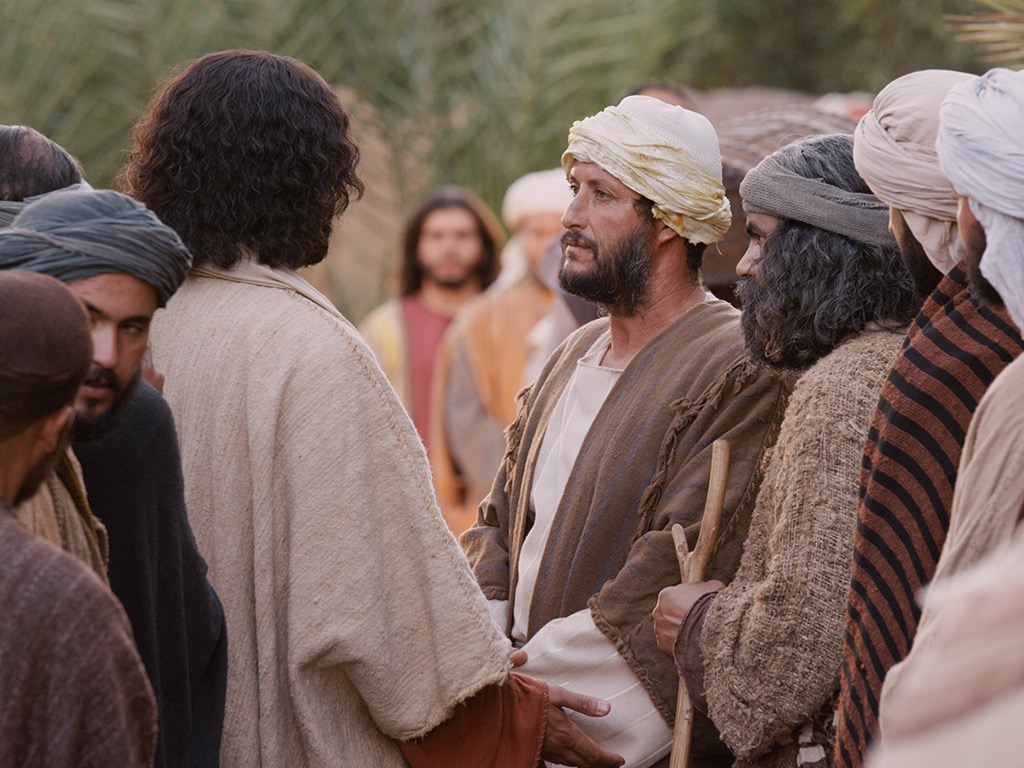
This week’s reading from the Gospel of Luke begins when Jesus tells His fellow townsmen that He is the fulfillment of the prophecy of Isaiah that He just read. At first, they seem to accept Jesus’ message with a sense of pride in their native son, and spoke very highly of Him. However, Jesus knew that soon they would reject Him, so He proclaimed: “Amen. I say to you, no prophet is accepted in his own native place.”


When Jesus explains that He is not just bringing “Good News” to them, but 
also to the neighboring Gentiles (non-Jews), they become angry and turn on Him. They actually drive Him out of the town, bring him to the top of a high hill, and plan to push Him off the edge to His death. However, Jesus, knowing their intentions, used His power to pass through the crowd and go on His way.

Why this sudden change of attitude? The reasons are the same that cause so many problems in our human relationships, group relationships, and national relationships: greed and envy. Happiness is sought in prestige, possessions, and power. These false values actually do not produce happiness. On the contrary, they bring about conflict, alienation, and even war.

If we want true happiness, we need to adopt the values of Jesus. He realized that being the Son of the Eternal Father was the greatest source of honor. He lived a simple lifestyle, not preoccupied with caring for excessive wealth. With this freedom of spirit, He used His gifts and talents to further the kingdom of God, His
Heavenly Father.

First, we need to keep in mind who we are and whose we are: children of a loving God. There is no greater prestige than that. Then we need to look on material goods as useful and to be shared with our brothers, sisters, and other creatures. Excessive wealth can become burdensome and cause preoccupation and worry. 

The following hymn is one of my favorites.

Hymn:  I’d Rather Have Jesus 
  1. I’d rather have Jesus than silver or gold;
  1. I’d rather be His than have riches untold;
  1. I’d rather have Jesus than houses or lands;
  1. I’d rather be led by His nail-pierced hand
  • Refrain:
  • Than to be the king of a vast domainOr be held in sin’s dread sway;
    I’d rather have Jesus than anything
    This world affords today.
  1. I’d rather have Jesus than men’s applause;I’d rather be faithful to His dear cause;
    I’d rather have Jesus than worldwide fame;
    I’d rather be true to His holy name

    He’s fairer than lilies of rarest bloom;
    He’s sweeter than honey from out the comb;
    He’s all that my hungering spirit needs;
    I’d rather have Jesus and let Him lead

Although American hymnals show Rhea Miller as the author of this song, Swedish sources attribute the original to Prince Oscar Bernadotte. In 1888, he relinquished his royal title and right to succession in order to marry a commoner who had influenced his religious beliefs. Afterward, he was active in Christian service.
attr. to Oscar C. A. Bernadotte, 1888
Rhea F. Miller, 1922
copyright status is 
Public Domain


Finally, we will be most happy when we spend ourselves using our God-given powers spreading the Good News of Jesus and making this world a better place for all. 


 Reflection Question:  Have you ever recognized jealousy or envy as the cause of troubled relationships? 
If so, please describe a situation.


Spanish Translation of Reflection Above...

Valores Falsos; Verdad Real


La lectura de esta semana del Evangelio de Lucas comienza cuando Jesús le dice a sus compatriotas que Él es el cumplimiento de la profecía de Isaías que acaba de leer. Al principio, parecen aceptar el mensaje de Jesús con un sentido de orgullo por su hijo nativo, y hablaron muy bien de él. Sin embargo, Jesús sabía que pronto lo rechazarían, así que proclamó:
 Amén. Te digo que ningún profeta es aceptado en su propio lugar nativo”.

Cuando Jesús explica que no solo les trae “Buenas Nuevas” a ellos, sino también a los gentiles vecinos (no judíos), se enojan y se vuelven contra él. En realidad, lo expulsan de la ciudad, lo llevan a la cima de una colina alta y planean empujarlo fuera del límite hasta su muerte. Sin embargo, Jesús, conociendo sus intenciones, usó su poder para pasar a través de la multitud y seguir su camino.


¿Por qué este repentino cambio de actitud? Las razones son las mismas que causan tantos problemas en nuestras relaciones humanas, relaciones de grupo y relaciones nacionales: avaricia y envidia. La felicidad se busca en prestigio, posesiones y poder. Estos valores falsos en realidad no producen felicidad. Por el contrario, provocan conflicto, alienación e incluso guerra.

Si queremos la verdadera felicidad, necesitamos adoptar los valores de Jesús. Se dio cuenta de que ser el Hijo del Padre Eterno era la mayor fuente de honor. Vivió un estilo de vida sencillo, no preocupado por cuidar la riqueza excesiva. Con esta libertad de espíritu, Él usó Sus dones y talentos para promover el reino de Dios, Su Padre Celestial.

Primero, debemos tener en cuenta quiénes somos y de quiénes somos: hijos de un Dios amoroso. No hay mayor prestigio que eso. Luego debemos considerar los bienes materiales como útiles y para compartirlos con nuestros hermanos, hermanas y otras criaturas. La riqueza excesiva puede convertirse en una carga y causar preocupación y preocupación. 

El siguiente himno es uno de mis favoritos.
Himno: Prefiero tener a Jesús 
  
  1. Prefiero tener a Jesús en lugar de plata u oro;
  2. Prefiero ser Suyo que tener riquezas no contadas;
  3. Prefiero tener a Jesús que casas o tierras;
  4. Prefiero ser guiado por su mano perforada por las uñas
  • Estribillo:
  • Que ser el rey de un vasto dominio.O ser retenido en el terror del pecado;Prefiero tener a Jesús que cualquier otra cosaEste mundo ofrece hoy.
  1. Prefiero tener a Jesús antes que el aplauso de los hombres;
    Prefiero ser fiel a su querida causa;
    Prefiero tener a Jesús que a la fama mundial;
    Prefiero ser fiel a su santo nombre
  2. Él es más justo que los lirios de floración más rara;
    Es más dulce que la miel del peine;
    Es todo lo que necesita mi espíritu hambriento;
    Prefiero tener a Jesús y dejarlo guiar

Aunque los himnarios estadounidenses muestran a Rhea Miller como el autor de esta canción, las fuentes suecas atribuyen el original al Príncipe Oscar Bernadotte. En 1888, renunció a su título real y su derecho a la sucesión para casarse con un plebeyo que había influido en sus creencias religiosas. Después, estuvo activo en el servicio cristiano.
attr. to Oscar C. A. Bernadotte, 1888
Rhea F. Miller, 1922
estado de copyright es Public Domain


Finalmente, seremos muy felices cuando nos gastemos usando nuestros poderes dados por Dios para difundir la Buena Nueva de Jesús y hacer de este mundo un lugar mejor para todos.


  Pregunta de reflexión:    ¿Alguna vez has reconocido que los celos o la envidia son la causa de las relaciones problemáticas?
Si es así, por favor describa una situación.


Monday, October 8, 2018

Oct. 14, 2018 - The Rich Young Man

The Twenty-Eighth Sunday in Ordinary Time  - Year B


Reading I: Wisdom 7:7-11

Psalm: 90

Reading II: Hebrews 4:12-13

Gospel: Mark 10:17-30

What might have been? This Sunday’s Gospel relates a sad incident in the life of Jesus and a rich young man. The young man had been living a good life, however, in admiring Jesus, he was inspired to generosity. Yet, when he approached Jesus asking what more he could do, he found Jesus’ challenge “to sell all he had, give to the poor, and follow him” was more than he could accept.

Jesus looked lovingly at the youth, but must have been disappointed that his earthly possessions had somehow taken possession of this good young man. These temporary goods were being valued above a close relationship with Jesus and the opportunity to share in his mission of bringing the Good News to many.

I can imagine that a great struggle continued inside the youth. He wanted to do more, but he was not willing to give the total gift of himself. If only he had shared his struggle with Jesus instead of walking away sad, Jesus could have helped him.

Jesus then turned to his disciples and said, “How hard it is for those who have wealth to enter the kingdom of God!” In spite of the fact that we cannot take material things with us when we die, the attraction to possessions and the comfort and security they can provide is very strong. Jesus compared the challenge of giving up riches to a camel trying to go through the eye of a needle.  The reference to the “eye of a needle” is a very narrow passage in a mountainous area.

Sometimes, we also are challenged to give up something for a greater good, and we, too, struggle with decisions. Let us remember that the Lord can help us. A beautiful hymn by the Jesuits is “Take, Lord, Receive.”

Take, Lord, Receive
From: Earthen Vessels Album by St. Louis Jesuits 
                                            
                                              Take, Lord, receive.
                                              all my liberty
                                              My memory, understanding, 
                                              my entire will!
                                              Give me only your LOVE,
                                              and your Grace,
                                              that's enough for me!
                                              Your love and your grace,
                                              are enough for me!
                                             
                                              Take Lord, receive,
                                              All I have and possess.
                                              You have given unto me,
                                              Now I return it.
                                              Give me only your love, 
                                              and your grace,
                                              that's enough for me!
                                              Your love and your grace,
                                              are enough for me!
                                               
                                             Take Lord, receive,
                                              all is yours now.
                                              Dispose of it,
                                              wholly according to your will.
                                              Give me only your love, and your grace,
                                              that's enough for me!
                                              Your love and your grace,
                                              are enough for me!


  Reflection Question:   Is there something that you find difficult to give up for the greater good?  If so, ask the Lord’s help.

In his inspirational message of September 30, 2018, in a series titled, “Stay Focused on God’s Plan for your Life,” Pastor Rick Warren states that, over the course of his ministry, thousands of people told him that they want to be used by God. Pastor Warren’s response was that they will never be used by God because they are too busy. They have their own agendas, plans, dreams, and ambitions and they just don’t have any time. I’m embarrassed to admit, but that sounds like me, trying to carve out a small amount of time for God in my daily routine. 
Your comment, Sr. Annette, regarding the rich young man, “If only he had shared his struggle with Jesus instead of walking away sad, Jesus could have helped him,” correlates to what Rick Warren writes. “If you’re serious about being used by God, you have to say, ‘Lord, what do I need to let go of? What do I need to cut out? What barriers are holding me back and keeping me from running the race you have for me?’ “ 
One of the biggest things that hold us back from God’s plan for us is distractions. Jesus’ words in Luke 9:62, roughly state that anyone who lets himself be distracted from the work God has planned for him is not fit for the kingdom of God. There are so many distractions in our daily life. One of which is our attachment to our material possessions. 
October 4th was the feast day of St. Francis of Assisi. The Entrance Antiphon for that day reads, “Francis, the man of God, left his home behind, abandoned his inheritance and became poor and penniless, but the Lord raised him up.” For those of us who enjoy material comforts, Francis’ total abandonment may seem undoable. If our focus is on material wealth, we may be blinded to Christ’s Presence in those in need around us. We see the joy of simple living in Pope Francis. He models conformity to Christ in poverty of spirit and humility. Perhaps the message for us is to live simply, give generously and love lavishly.
The words of Jesus today invite reflection. As Fr. James A. Wallace writes, “It is hard to enter the Kingdom if you have a lot. If your hands – and your heart – are already full with possessions and obsessions, there might not be any room for God’s presence…These words call us to think about what we have, and what has us. They invite us to discern what holds our hearts captive.”
Pat C., ASBS


Wednesday, September 21, 2016

September 25, 2016 - The Rich Man and Lazarus

The Twenty-sixth Sunday in Ordinary Time - Year C

Image result for the parable of the rich man and lazarus

Reading I: Amos 6: 1a, 4-7
Response: Psalm 146
Reading II:  1 Timothy 6: 11- 16
Gospel: Luke 16: 19-31


Is there anything wrong with being rich?  Jesus seems to focus on the dangers of being rich. He says that it is easier for a camel to pass through a needle than for a rich man to get into heaven. Of course, the “needle” is not a sewing needle.  However, even though he is referring to a narrow passageway in the mountains through which shepherds and herders needed to lead their animals, we wonder why he stresses this.   

It seems obvious that we need to share with those who are needy. But, there seems to be more to it. Eleanor Stump, professor of philosophy at St. Louis University, sheds some light on this when she points out the words used in the Gospel. When the rich man is in hell, he asks the Lord to send Lazarus, who is resting in the bosom of the Lord, to get him some water to quench his thirst.  When the Lord refuses, the rich man asks God to send Lazarus to his brothers to warn them about the folly of riches. The Lord refuses again. Why? Perhaps the Lord is reacting to the rich man’s basic attitude of seeing Lazarus as only useful to him. He doesn’t consider him a brother, as an equal. Rather he chooses only to use him for his own purposes. Even the dogs lick the wounds of Lazarus as they do for themselves and one another. They have compassion and try to heal him. 

The rich who are poor in spirit reach out and share with the poor. The poor recognize those who have a superior attitude and those who see them as brothers and sisters. At the 125th jubilee celebration for the Sisters of the Blessed Sacrament, Bishop Curtis J Guillory, SVD, of the Beaumont, Texas Diocese, shared his experiences with the Sisters of the Blessed Sacrament. He made a comment which touched me. He said that the Sisters “engaged” with the people. In other words, they became a part of the people with whom they ministered. They realized that they were enriched themselves by the poor they served.

Another view is expressed by Fr. Ron Rolheiser, OMI. He reminds us that for our own physical,
psychological and spiritual health, we need to share. Our Native American brothers and sisters have retained that generosity of spirit by some of their customs. For example, when I young man has success hunting a deer, the family has a “deer supper.” I was invited to one by one of our Pueblo Sisters from Laguna, New Mexico. Before the meal the skull of the deer was placed on a side table. The mother of the young hunter blessed her son and thanked the deer for giving its life to feed the people. Then, everyone in the village and friends were invited to partake in the meal. They took turns eating in silence and moved on so others could have a place at the table. While waiting for a turn at the table, people were watching a ballgame on TV and chatting. It was like two worlds in one house.

Another custom is that on birthdays, the one being celebrated is the giver of gifts. Of course, in today’s world they probably receive gifts also. However, the custom reminds them that they are
here to share with others also. On special holy days, they have “throws.” Items like candy, blankets, etc. are thrown from flat adobe rooftops for anyone to take.  

A real challenge comes when a relative is in financial need, e.g. because of alcohol or drug problems. The expectation is that the relative with some resources will provide for the needy one. Therefore, it is difficult for them to save for future needs of their own family. Nevertheless, they do have the sense that accumulating too much is unhealthy.

It is healthy to share because it prevents one from becoming too self-centered. One of the first things that many mothers teach their small children is to share treats that they receive and to share their toys. That can be a difficult lesson, but an important one. Young people who are encouraged to do some type of service to help others experience a sense of pride and joy. It feels good and is a wonderful experience for them and those they help. That is good for people of all ages. God our Father and Jesus know what we need for a healthy and happy life. It is not to hold tightly onto wealth. Rather it is to share our time, talent, and treasures with our brothers and sisters.

Wednesday, September 14, 2016

September 18, 2016 - God's Call to Share His Gifts


The Twenty-fifth Sunday in Ordinary Time - Year C

Image result for parable of the unjust steward

Reading 1: Amos 8: 4-7
Response: Psalm 113
Reading II:  1  Timothy 2: 1-8
Gospel: Luke 16: 1-13 or 10-13


In the “Parable of the Unjust Steward,” Jesus notes the mercy of God toward the Steward. The steward was one who managed the property of the Master (owner) and collected produce or money from the renters. He was allowed a commission or fee for each transaction. However, according to the Mishnah (a post-biblical tradition in Judaic literature), there is no evidence that the steward would be given a commission as high as 50%. In this story, not only had he failed in the management of the master’s property, he had also tried to cover up his errors
by cheating.

As humans we are prone to making mistakes and are usually readily excused. However, being deceitful leads to distrust with more serious consequences.


In the Gospel, it is noted that one “cannot serve both God and mammon [wealth].” This does not mean that being wealthy means one does not serve God. There are some wealthy people who are aware that their wealth has been accumulated, not only by hard work, but also due to God’s gifts of health, education, and favorable circumstances, for which they are indebted to the Lord. They see themselves as stewards for God, their Master. They use their gifts in a variety of ways by volunteering time and talent, as well by the the opportunity to help others financially. 

At a time when the Indian peoples were being driven off their lands and a prime source of survival was being destroyed by the ruthless killing of the buffalo, The Drexel family was noted for their philanthropy and their generosity to the Indian Missions. They even traveled by stagecoach to see the plight of these people and bring them assistance.

Closer to home, in Philadelphia, they were aware of the plight of African-Americans who had recently been released from slavery, but had no education and means of providing for themselves and their families. Some even chose to go back to work for their former owners in order to survive. The Drexels became aware of the need for a good education for these people so that they could develop their skills for profitable employment.

Several times a week, Mrs. Emma Bouvier Drexel together with her three young daughters, would open their doors to the poor and provide them with food, clothing, rent money, etc. Involvement in this charity allowed the young ladies
to become engaged with the poor so that they related to them on a very
personal level.  


Even as Francis Drexel made out his will, after assuring that his daughters would be well cared for, he included many charities. Not aware that Katharine would be founding a Community to help the poor among the Black and Native American peoples, much of his money was distributed to those charities on
his death.


While most of us do not have very large resources to reach out monetarily to help others, wealth comes in many other forms. It can be love, expressed by a smile, a listening ear, or a helping hand. These and many other ways of reaching out can make a person feel as if he/she had been given a
million dollars.


One of my favorite poems by Nikki Giovanni, a famous African-American poetess, attests to this:

Nikki-Rosa

Related Poem Content Details

childhood remembrances are always a drag   
if you’re Black 
you always remember things like living in Woodlawn   
with no inside toilet 
and if you become famous or something 
they never talk about how happy you were to have   
your mother 
all to yourself and 
how good the water felt when you got your bath   
from one of those 
big tubs that folk in chicago barbecue in   
and somehow when you talk about home   
it never gets across how much you 
understood their feelings 
as the whole family attended meetings about Hollydale 
and even though you remember 
your biographers never understand 
your father’s pain as he sells his stock   
and another dream goes 
And though you’re poor it isn’t poverty that 
concerns you 
and though they fought a lot 
it isn’t your father’s drinking that makes any difference   
but only that everybody is together and you 
and your sister have happy birthdays and very good   
Christmases 
and I really hope no white person ever has cause   
to write about me 
because they never understand 
Black love is Black wealth and they’ll 
probably talk about my hard childhood 
and never understand that 
all the while I was quite happy

Let us be good stewards of the Master. Let us share his unique gifts to us, whatever they may be.  The more we share, the more we are enriched. That is how we can delight the heart of our Heavenly Father!!!