Showing posts with label Matthew 1:18-24. Show all posts

Sunday, November 22, 2020

December 2020 - Christmas / Advent

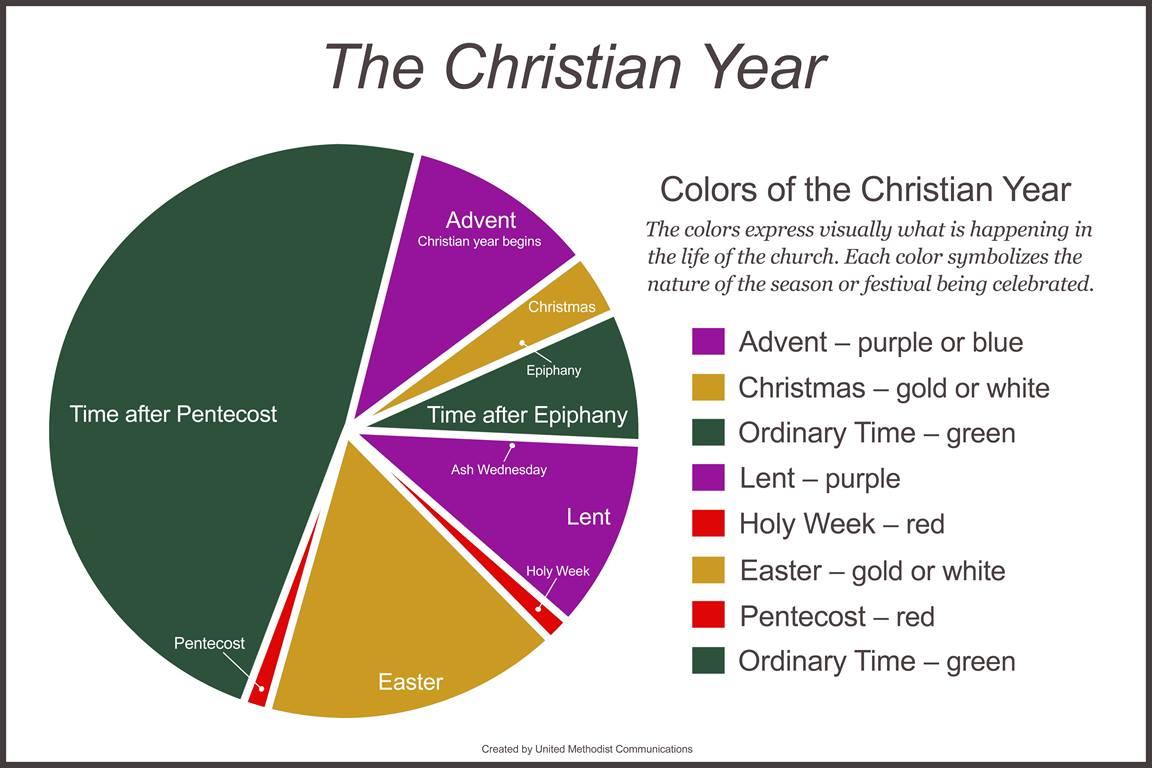
The Christian year includes the central seasons of Christmas and Easter followed by Ordinary Time. The colors associated with the different seasons express visually what is happening in the life of the church. Each color symbolizes the nature of the festival being celebrated. Graphic by Laurens Glass, United Methodist Communications.


The story of our salvation is retold every year through the observances in the Church Calendar. It begins with Advent (the coming) as we reflect on the Hebrew and Christian Scriptures.


John 3:16

God so loved the world that he gave his only Son, that whoever believes in him should not perish but have eternal life.


We look back in the Hebrew Scriptures to the prophet Isaiah who predicts what kind of a Savior the Father is sending us.


Isaiah 42:1-7


Behold my servant, whom I uphold, my chosen,

in whom my soul delights;
I have put my Spirit upon him;
    he will bring forth justice to the nations.
He will not cry aloud or lift up his voice,
    or make it heard in the street;
a bruised reed he will not break,
    and a faintly burning wick he will not quench;
    he will faithfully bring forth justice.
He will not grow faint or be discouraged
    till he has established justice in the earth;
    and the coastlands wait for his law.

Thus says God, the Lord,
    who created the heavens and stretched them out,
    who spread out the earth and what comes from it,
who gives breath to the people on it
    and spirit to those who walk in it:

“I am the Lord; I have called you in righteousness;
    I will take you by the hand and keep you;
I will give you as a covenant for the people,
    a light for the nations,
to open the eyes that are blind,
to bring out the prisoners from the dungeon,
    from the prison those who sit in darkness.


We turn to the Christian Scriptures to hear the story of the arrival of the Savior, Jesus Christ, as we celebrate the Feast of Christmas.


Matthew 1:18-23

Now the birth of Jesus Christ took place in this way. When his mother Mary had been betrothed to Joseph, before they came together, she was found to be with child from the Holy Spirit. And her husband Joseph, being a just man and unwilling to put her to shame, resolved to divorce her quietly. But as he considered these things, behold, an angel of the Lord appeared to him in a dream, saying, “Joseph, son of David, do not fear to take Mary as your wife, for that which is conceived in her is from the Holy Spirit. She will bear a son, and you shall call his name Jesus, for he will save his people from their sins.” All this took place to fulfill what the Lord had spoken by the prophet:

“Behold, the virgin shall conceive and bear a son, and they shall call his name Immanuel” (which means, God with us).                 

*************************

During the Advent/Christmas season, we try to bring the Spirit of Jesus into our current world. In the past, there were beautifully decorated churches, joyful Masses and Services, Christmas trees, gift-giving, random acts of kindness, cards or visits to relatives and friends, Christmas baskets and toys for the needy, Christmas shows, concerts, etc. 

This Christmas will be somewhat different. Rather than gathering together for Christmas parties, avoiding crowds and parties may be one of the best gifts we give one another to prevent the spread of the deadly virus.

However, we can still celebrate with the use of our creativity and technology. Virtual church services, Zoom gatherings, sending cards and gifts through the mail. With less money to spend, homemade cards and gifts may delight our loved ones. If you have the financial means, donating to help a family that does not have income would be appreciated. A telephone call might brighten someone’s day. 

Listening to Christmas carols can bring back happy memories. One of my favorites is ”O Holy Night.” Just taking the time to reflect on the words can bring Peace.”

‘O Holy Night’ is a timeless Christmas carol, composed by Adolphe Adam in 1847.

O holy night, the stars are brightly shining,

It is the night of the dear Saviour’s birth;
Long lay the world in sin and error pining,
'Till he appeared and the soul felt its worth.
A thrill of hope the weary world rejoices,
For yonder breaks a new and glorious morn;

Chorus
Fall on your knees, Oh hear the angel voices!
O night divine! O night when Christ was born.
O night, O holy night, O night divine.

Led by the light of Faith serenely beaming;
With glowing hearts by his cradle we stand:
So, led by light of a star sweetly gleaming,
Here come the wise men from Orient land,
The King of Kings lay thus in lowly manger,
In all our trials born to be our friend;

Chorus
He knows our need, To our weakness, no stranger!

Behold your King! Before Him lowly bend!
Behold your King! Your King! Before he bends!

Truly He taught us to love one another;
His law is Love, and His gospel is Peace;
Chains shall he break, for the slave is our brother,
And in his name, all oppression shall cease,
Sweet hymns of joy in grateful chorus raise we;
Let all within us praise his Holy name!

Chorus
Christ is the Lord, then ever! ever praise we!
His power and glory, evermore proclaim!


How are you going to make this Christmas special?


Have a Blessed Christmas and a Happy and Healthy New Year!


Comments:


Pat Chiaffa, ASBS

Our great and glorious God revealed his love for us by sending his beloved Son, Jesus, to dwell amongst us. Reverence, peace, and hope touch our hearts when we gaze upon the Nativity scene. We get a glimpse into the wonder of life. However, somewhere between the Stable and our return to daily living, many of us come to believe that Jesus came to respond to our personal needs. Rarely do we recognize that “Christ in our midst” is an “invitation from God inviting us to participate in God’s universal creative work,” as suggested by Father Richard Rohr.

In his letter to the Romans (19,22) St. Paul writes, “The whole of creation is eagerly waiting for the revelation of the sons and daughters of God…all creation is groaning in one great act of giving birth.”

Sr. Pat Bergen, CSJ, offers a present-day reflection on those verses, “all of creation is in labor waiting for us to wake up and realize the fullness of who we are called to be – Christ.” Sister is referring to Christ's consciousness. “To awaken to this consciousness is to awaken to the reality that the ‘breath of God’ is sustaining all that is. Therefore, everything belongs to and participates in God and God participates in all that is. This is Good News for the universe!”

No longer can I be content with passive contemplation of the loveliness of the birth event of the Redeemer of the world. I recognize that it is time for me to move beyond my “me-centeredness” to a sense of self that Sr. Bergen identifies as including “the whole cosmos – a sense of self that is one with God and one with all that is, was or ever will be.”

My prayer during this Advent and Christmas season is that I will discern the voice of Jesus as I ponder my response to the awareness of journeying into the fullness of Christ.

Let us adore the Christ Child by living in His love and rejoicing in the miracle of His birth. Sr. Annette, wishing you, your readers, and their loved ones, a blessed and peaceful Christmas. 


Stephanie Morris, Ph.D., ASBS, Historian, Certified archivist emerita

Our celebration of Christmas will be different this year for most of us.

Military families have been separated from loved ones for long periods and

often over holidays. We are fortunate that we can connect with family and friends

using technology. This season may be a little quieter and this may give us

some time to focus on the real meaning of Christmas.

We know "Jesus is the reason for the season" but how often do we talk to

the Infant King Who was born in poverty to give us the riches of salvation?

What gift did we get Jesus this year? A phone call to a shut-in relative or friend?

An extra Rosary for healing? Mother Katharine noted that Jesus came as an infant;

infants take small, "baby steps." We can take small steps in sharing

Christmas peace and joy with others.

Monday, December 16, 2019

Dec. 22, 2019 The Fourth Sunday of Advent

December 22, 2019
Fourth Sunday of Advent/Christmas

Reading I: Isaiah 7:10-14
Psalm 24
Reading II: Romans 1:1-7
Gospel: Matthew 1:18-24


We usually celebrate Christmas around the time of the Winter Solstice, which marks the shortest day of the year. Following the solstice, the days begin to get longer. Even before the time of Jesus, the ancient peoples celebrated the longer light with Winter Solstice Festivals. Now, Jesus is referred to as the Light of the World and thus lights are important symbols of Christmas. 

Light reveals things to us. The ancient peoples recognized that there is a Creator of our world by studying Nature. They understood that God is powerful and intelligent. They experienced Him as their Provider as they harvested food from the earth.

However, when Jesus came as one of us, he revealed other qualities of God. Since he often referred to his Father, his disciples were anxious to see him and even asked Jesus to show them the Father.  The response of Jesus was that when they looked at Jesus, they saw the Father, since the Father and Jesus were one.  

If Jesus had not come to us in human form, we would not have understood that God is compassionate, yet just. For example, in a world where women were considered less than men, Jesus related to them in a respectful and loving manner. We have a deeper understanding of God because of how Jesus lived. Jesus entered this world of darkness to bring us the light of life.

We also learn a lot about the light of faith from Mary and Joseph. As a very young woman, Mary trusted God enough to say "Yes" to the virginal conception of  Jesus and all the suffering that would entail. How could she explain to Joseph that she had been faithful to him when she was already pregnant without their having consummated their marriage? 

What confusion and hurt Joseph must have felt when he realized Mary's pregnancy? His love was so strong that he chose to treat her with kindness, even before an angel of the Lord appeared to him in a dream and said to him, 

"Joseph, son of David, do not be afraid to take Mary as your wife into your home, for it is through the Holy Spirit that this child has been conceived in her. She will bear a son and you are to name him Jesus because he will save his people from their sins." (Matt 1:20)

Both Mary and Joseph showed deep faith and obedience to the will of God, in spite of all the suffering they had to endure.  One of my favorite memories is the witnessing of a posada when I was teaching at St. Catherine Indian School in Santa Fe, New Mexico. The word posada means "inn" or "shelter." Our community always included people of other cultures. One year, a Spanish brother and sister were chosen from our school to represent Mary and Joseph in a posada. I had never even heard of a posada before that time.  

A posada is an important Mexican Christmas tradition that is practiced in some parts of the United States now. The posada reenacts the story of Mary and Joseph's attempt to find shelter in Bethlehem after their long trip to comply with Caesar Augustus' order to return to the town of their family origin for a census. Since Joseph was of the house and family David, that meant difficult to travel by donkey and on foot at a time when Mary was near the time to give birth.

Because of the census, Bethlehem was crowded with people returning to the place of their family origin. The posada recalls the difficulties of Mary and Joseph experienced finding shelter as Mary is about to give birth. In the posada, either people or images representing Mary and Joseph traveling from place to place are followed by a candlelight procession of people singing Christmas Carols. Joseph dramatizes the requesting of a place to stay and another person, representing an innkeeper, responds that there is no room for them.

Finally, one person takes pity on them and offers them a place in a cave used for an animal shelter. It is there that the King of the Universe and Light of the World is to be born. The people in the procession are invited into a home or building and there is much celebration. It is a beautiful reminder of the importance of opening our hearts for Jesus to be born again in us so that his light can shine in our world today.

Reflection Question: How can I make room in my heart so that Jesus can be born again in me and bring light and love into our world today?


Spanish Translation
Cuarto domingo de Adviento/Navidad

Lectura I:  Isaías 7:10-14
Salmo 24
Lectura II:  Romanos 1:1-7
Evangelio: Matthew 1:18-24


Por lo general, celebramos la Navidad en la época del solsticio de invierno, que marca el día más corto del año. Después del solsicio, los días comienzan a alargarse. Incluso antes de la época de Jesús, los pueblos antiguos celebraban la luz más larfa con los festivales de solsticio de invierno. Ahora, a Jesús se le conoce como la Luz del Mundo y, por lo tanto, las luces son símbolos importantes de la Navidad. 

La luz nos revela cosas. Los pueblos antiguos reconocieron que existe un Creador de nuestro mundo al estudiar le Naturaleza. Ellos entendieron que Dios es ponderoso e inteligente. Lo experimentaron como su Proveedor mientras cosenchaban alimentos de la tierra.

Sin embargo, cuando Jesús vino como uno de nosotros, reveló otras cualidades de Dios. Como a menudo se refería a su Padre, sus discípulos estaban ansiosos por verlo e incluso le pidieron a Jesús que les mostrara al Padre. La respuesta de Jesús fue que cuando miraban a Jesús, veían al Padre, ya que el Padre y Jesús eran uno.


Si Jesús no hubiera venido a nosotros en forma humana, no habríamos entendido que Dios es compasivo, pero justo. Por ejemplo, en un mundo donde las mujeres eran consideradas menos que los hombres, Jesús se relacionó con ellas de manera respuruosa y amorosa. Tenemos una comprensión más profunda de Dios debido a cómo vivió Jesús. Jesús entró en este mundo de oscuridad para traernos la luz de la vida.

También aprendemos mucho sobre la luz de la fe de María y José. Como una mujer muy joven, María confiaba en Dios lo suficiente como para decir "Sí" a la concepción virginal de Jesús y todo el sufrimiento que conllevaría. ¿Cómo podía explicarle a José que había sido fiel a él cuando ya estaba embarazada sin que hubieran consumado su matrimonio?


¿Qué confusión y dolor debió haber sentido José cuando de dio cuenta del embaraza de María? Su amor era tan fuerte que decidió tratarla con amabilidad, incluso antes de que un ángel del Señor se le apareciera en un sueño y le dijera:
"José, hijo de David, no tendas miendo de llevar a María como tu esposa a tu casa, porque es por medio del Espíritu Santo que este niño fue condebido en ella. Ella dará a luz un hijo y debes llarmarlo Jesús porque él salvará a su pueblo de sus pecados". (Mateo 1:20)

Tanto María como José mostraton una profunda fe y obediencia a la coluntad de Dioa, a pesar de todo el sufrimiento que tuvieron que soportar. Uno de mis recuerdos faoritos es ser testigo de una posada cuando estaba enseñando en la Escuela de Indígenas St. Catherine en Santa Fe, Nuevo México. La palabra posada significa "posada" o "refugio". Nuestra comunidad siempre incluía personas de ostras culturas. Un año, un hermano y una hermana españoles fueron elegidos de nuestra escuela para representar a María y José en una posada. Nunca antes había oído hablar de una posada

Una posada es una importante tradición navideña mexicana que ahora se practica en algunas partes de los Estados Unidos. La posada recrea la historia del intento de María y José de encontrar refugio en Belén después de su largo viaje para cumplir con la orden de César Augusto de regresar a la ciudad de origen familiar para un censo. Como José era de la casa y la familia de David, eso significaba que era difícil viajar en momento en que María estaba cerca del momento de dar a luz.

Debido al censo, Belén estaba abarrotada de personas que regresaban al lugar de origen de su familia. La posada recuerda las dificultades de María y José para encontrar refugio cuando María está a punto de dar a luz. En la posada, las personas o las imágenes que representan a María y José que viajan de un lugar a otro son suguidas por una procesión de velas cantando villancicos navideños. José dramatiza la solicitud de un lugar para quedarse y otra persona, que representa a un posadero, responde que no hay espacio para ellos. 

Finalmente, una persona se compadece de ellos y les ofrece un lugar en una cueva utilizada como refugio para animales. Es allí donde nacerá el Rey del Universo y la Luz de Mundo. Las personas en la procesión son invitadas a una casa o edificio y hay mucha celebración. Es un ermoso recordatorio de la importancia de abrir nuestros corazones para que Jesús nazca de nuevo en nosotros para que su luz pueda brillar en nuestro mundo de hoy.

Pregunta de Reflexión: ¿Cómo puedo hacer espacio en mi corazón para que Jesús pueda nacer de nuevo en mí y traer luz y amor a nuestro mundo hoy?


Comments
Stephanie Morris, ASBS, Ph.D Historian, Certified Archivist, Emerita
Is my heart a rough-hewn manger or a soft crib, waiting for the Infant Savior? Angry or hurtful memories are harsh and rough; prayers and kind acts can soften these. Praying for those with whom we are angry or doing quiet acts of kindness can line the crib of our heart with soft pieces of straw. We don’t have to do great deeds; any ordinary action “extraordinarily well done” for the love of God will cushion our hearts to provide a welcoming crib for the Infant Jesus.

Pat Chiaffa, ASBS
Monday evening, December 9 th, was my company “Holiday” party. The event was held at a beautifully decorated country club. The food and drinks were delectable and plentiful. It was nice having the opportunity to chat leisurely with co-workers and each of us received a bottle of wine to take home. I drove home feeling grateful for the generosity of my employer. But, I wasn’t feeling “holiday-ish.” It was straight to bed for me because tomorrow was a workday.

It snowed overnight and the next morning as I drove to the office I was in awe of the beauty of the freshly fallen snow covering the trees and vast grassy areas. There was a sense of stillness and peace on the Interstate Highway. As I was taking in this incredible scenery, the song “Christmas Shoes” started playing on the radio. It’s about the love of an impoverished young boy for his terminally ill mother and a man who was very much trapped in the chains of success and attainment. Through this young boy’s desire to make his dying mother look beautiful to meet Jesus on that Christmas Eve, by wearing the red shoes he wanted to buy for her, this distracted man awakened to the Presence of God in Christmas. Tears poured from my eyes. In the sacred space of my car during the “holy hour” of my commute, I encountered the true Spirit of Christmas in the message of that song. At the same time, I felt deeply saddened at how the focus on the birth of Christ has become, in general, such a minor part of Christmas.

Prior to reading your blog, I was not familiar with a Posada. I really like the practice because it draws our attention to the difficulties that Joseph and Mary encountered on their “census pilgrimage” to Bethlehem. Exhausted after their forced journey of over 100 miles, there was no room at the inn for them to rest. Joseph’s heart must have been wrenched with disappointment at not being able to provide comfort and warmth for Mary. Yet, we celebrate their journey with illumined festivity. In reality, it was a very dark and dangerous walk. The fear resulting from the political unrest that gripped Bethlehem, and the smell of the manger have been obscured by sentimentality and commercialism.

This time of the year is very painful for many people. Strained finances, fragile relationships, unrealized hopes and expectations are acutely felt even though the “air” is filled with bright lights, shiny tinsel and Holiday music. We will never find the enduring happiness for which we yearn in the world no matter how festively it is packaged and how elegantly it is served up.

The wholeness, the oneness, the peace, the connection to the Christ child that many of us seek will be found in simplification and quiet reflection on the mystery of the incarnation. For some individuals, finding the way to the Christ child might include the willingness to accompany Joseph and Mary on the road to Bethlehem by examining the rough terrain that remains in one’s heart –remnants of resentment, anger, selfishness - and doing the work to release them so there will be room in our heart to receive Jesus. He came to heal and comfort the weak and the vulnerable – where else need we look but to the Baby in the manger to restore us to grace, peace and the reclaiming of our identity as the child of God that we are.

With an uncluttered, open heart, we can invite the Christ Child to be born anew within us, to illuminate His light in us and fill us with His Love. This renewal is the true miracle of Christmas. Having received these divine gifts, not only can we rejoice; we will radiate His light and love in the world.

Wednesday, December 14, 2016

December 18, 2016 - The Faith and Trust of Joseph and Mary

The Fourth Sunday of Advent - Year A

Reading 1: Isaiah 7:10-14
Response: Psalm 24
Reading 2: Romans 1:1-7
Gospel: Matthew 1:18-24

In today’s Gospel, we hear of the dilemmas of Joseph and Mary, as they face the circumstances around the conception of Jesus. Mary is pregnant, and Joseph to whom she is betrothed is not the father. In their society, a woman pregnant out of wedlock was to be stoned to death.

Joseph is torn because he is an observer of the law, yet he is too much in love with Mary to carry out the law. He very reluctantly decides to divorce her quietly. He knows Mary’s goodness, but doubts may have crept in. Did he ask Mary how she came to be with child? Did he question her answer? 

In the picture above, we see Joseph trying to sleep. The picture suggests that he is in emotional turmoil, probably unable to sleep. God sends an angel to reassure him that the child was conceived by the Holy Spirit and that he is to take her to his home.

On Mary’s side, how heartbreaking to see the emotional pain of Joseph, and experience her own, as she senses the disdain of those who now consider her a sinful woman! How she must have been hurt by the contempt in the eyes of her neighbors! Was she anxious about her child? Would he be considered illegitimate? Would he be mistreated? How could she convince Joseph that she had been faithful to him?

God didn’t have to allow all this turbulence in the relationship between Mary and Joseph. Couldn’t He have spared them all that suffering? Surely, there would be another option. Then, why did God allow all this suffering? Could it be so that the relationship between Mary and Joseph could deepen? How grateful Mary must have been when Joseph took her to his home. How grateful Joseph must have felt when Mary still loved him in spite of his questioning her faithfulness. How tender their love must have become!

What about their relationships with God? Did that deepen as a result of the trials they had experienced? Their faith and trust had been sorely tested. However, by grace, they were able to be faithful to God, and to one another.

This seems to be one of the ways the Lord works with us humans. If the pain and suffering are accepted with His help and that of others, they can bring us closer to Him and to one another. On the other hand, there are those who become bitter instead of better with suffering. Let us ask the Lord to help us to become more holy, following the example of Joseph and Mary.

During this season of Advent, let us remember that God is our Fortress. He is our Strength. He is our Father who knows what is for our ultimate good. Let us deepen our faith and trust in Him, as did Joseph and Mary!

Spanish Translation of Reflection Above...

La fe y la confianza de José y María


En el Evangelio de hoy, oímos hablar de los dilemas de José y María, cuando enfrentan las circunstancias alrededor de la concepción de Jesús. María está embarazada, y José a quien está prometida no es el padre. En su sociedad, una mujer embarazada fuera del matrimonio iba a ser apedreada hasta la muerte.

José está desgarrado porque es un observador de la ley, pero está demasiado enamorado de María para llevar a cabo la ley. Él muy a regañadientes decide divorciarse de ella en silencio. Él conoce la bondad de María, pero es posible que haya habido dudas. ¿Le preguntó a María cómo había llegado a estar con su hijo? ¿Preguntó su respuesta?

En la foto de arriba, vemos a José tratando de dormir. El cuadro sugiere que él está en la agitación emocional, probablemente incapaz de dormir. Dios envía un ángel para tranquilizarle que el niño fue concebido por el Espíritu Santo y que él debe llevarla a su casa.

¡De parte de María, cuán desgarrador es ver el dolor emocional de José, y experimentar la suya, al sentir el desprecio de aquellos que ahora la consideran una mujer pecadora! ¡Cómo debió haber sido herida por el desprecio a los ojos de sus vecinos! ¿Estaba ansiosa por su hijo? ¿Sería considerado ilegítimo? ¿Sería maltratado? ¿Cómo podía convencer a José de que le había sido fiel?

Dios no tuvo que permitir toda esta turbulencia en la relación entre María y José. ¿No les habría podido ahorrar todo ese sufrimiento? Seguramente, habría otra opción. Entonces, ¿por qué Dios permitió todo este sufrimiento? ¿Podría ser para que la relación entre María y José pudiera profundizarse? Cuán agradecida María debe haber sido cuando José la llevó a su casa. ¡Cuán agradecido José debe haber sentido cuando María todavía lo amaba a pesar de su cuestionamiento de su fidelidad. ¡Qué tierna debe haber sido su amor!

¿Qué pasa con sus relaciones con Dios? ¿Esto se profundizó como resultado de las pruebas que habían experimentado? Su fe y su confianza habían sido muy probadas. Sin embargo, por gracia, fueron capaces de ser fieles a Dios, ya los unos a los otros.

Esta parece ser una de las maneras en que el Señor trabaja con nosotros, los humanos. Si el dolor y el sufrimiento son aceptados con Su ayuda y la de otros, pueden acercarnos más a Él ya los demás. Por otro lado, hay quienes se vuelven amargos en vez de mejor con el sufrimiento. Pidamos al Señor que nos ayude a ser más santos, siguiendo el ejemplo de José y María.

Durante esta temporada de Adviento, recordemos que Dios es nuestra Fortaleza. Él es nuestra Fuerza. Él es nuestro Padre que sabe lo que es para nuestro bien supremo. ¡Aprofundemos nuestra fe y confianza en Él, como José y María!